Tuổi 15 – Khi Tôi Học Cách Lớn Lên Một Mình

Bài viết bằng tiếng Việt (English version below)

Có những người lớn lên trong vòng tay của gia đình.

Còn tôi, tôi lớn lên cùng những quyết định của chính mình.

Năm 15 tuổi, tôi rời Việt Nam để sang Úc. Ở cái tuổi mà nhiều bạn còn được ba mẹ chăm sóc từng bữa ăn, nhắc nhở chuyện học hành và che chở trước những khó khăn, tôi bắt đầu học cách tự đứng trên đôi chân của mình ở một đất nước hoàn toàn xa lạ.

Nhìn lại chặng đường ấy, tôi nhận ra rằng những thử thách mình trải qua đã trở thành những người thầy tuyệt vời nhất.

1. Không ai nợ mình điều gì

Cuộc sống không hứa hẹn sẽ công bằng.

Không ai có trách nhiệm phải giúp mình thành công.

Khi chấp nhận điều đó, tôi thôi đổ lỗi cho hoàn cảnh và bắt đầu chịu trách nhiệm hoàn toàn cho cuộc đời mình.

Đó là lúc tôi thực sự trưởng thành.

2. Tự do luôn đi kèm với trách nhiệm

Sống một mình đồng nghĩa với việc mọi quyết định đều là của mình.

Nếu thành công, mình biết ơn những nỗ lực đã bỏ ra.

Nếu thất bại, mình cũng học cách chịu trách nhiệm thay vì tìm người để trách.

Đó là cái giá của sự tự do.

3. Kỷ luật quan trọng hơn động lực

Có rất nhiều ngày tôi không muốn học.

Không muốn làm việc.

Không muốn cố gắng thêm nữa.

Nhưng tôi vẫn tiếp tục.

Động lực sẽ đến rồi đi.

Kỷ luật mới là điều giúp chúng ta tiến xa.

4. Thất bại chỉ là một bài học

Tôi từng bị từ chối.

Từng cảm thấy mình chưa đủ giỏi.

Từng nghi ngờ chính bản thân.

Nhưng mỗi lần vấp ngã đều giúp tôi mạnh mẽ và khiêm tốn hơn.

5. Đừng chỉ xây dựng sự nghiệp, hãy xây dựng chính mình

Công việc rất quan trọng.

Nhưng con người mình trở thành còn quan trọng hơn.

Tôi học yoga.

Tôi học diễn xuất.

Tôi tham gia Toastmasters.

Tôi đọc sách.

Tôi gặp gỡ những con người truyền cảm hứng.

Mỗi trải nghiệm đều giúp tôi hiểu bản thân hơn.

6. So sánh là kẻ đánh cắp niềm vui

Ai cũng có một hành trình riêng.

Tôi không còn cố gắng sống cuộc đời của người khác.

Tôi chỉ cố gắng trở thành phiên bản tốt hơn của chính mình mỗi ngày.

7. Gia đình không chỉ là nơi mình sinh ra

Sống xa quê dạy tôi rằng gia đình còn là những người luôn ở bên mình bằng tình yêu và sự chân thành.

Đôi khi, những người ấy không cùng huyết thống.

Nhưng họ luôn xuất hiện đúng lúc cuộc sống cần nhất.

8. Không bao giờ là quá muộn để bắt đầu

Tôi đã thay đổi nghề nghiệp.

Học thêm nhiều kỹ năng mới.

Theo đuổi những đam mê mới.

Mỗi lần bắt đầu lại không phải là quay về số không.

Mà là bước tiếp với nhiều kinh nghiệm hơn.

9. Thành công là được sống đúng với giá trị của mình

Ngày trước tôi nghĩ thành công là kiếm thật nhiều tiền.

Bây giờ tôi nghĩ thành công là mỗi sáng thức dậy với một cuộc sống có ý nghĩa.

Được giúp đỡ người khác.

Được học hỏi.

Được phát triển.

Được là chính mình.

Lời kết

Nếu có thể nói với cậu bé 15 tuổi năm ấy một điều, tôi sẽ nói:

“Đừng sợ. Con đường phía trước sẽ không dễ dàng. Nhưng chính những ngày tháng khó khăn sẽ tạo nên phiên bản mạnh mẽ nhất của em.”

Hôm nay, tôi biết ơn tất cả những gì mình đã trải qua.

Bởi vì nếu không có cậu bé 15 tuổi dũng cảm năm ấy, sẽ không có tôi của ngày hôm nay.

Cảm ơn bạn đã dành thời gian đọc câu chuyện của tôi.

Chúc bạn luôn đủ can đảm để bước tiếp trên hành trình của riêng mình.

Binh


Age 15 – Learning to Grow Up on My Own

English Version

Some people grow up surrounded by the comfort of family.

I grew up through my own decisions.

At the age of fifteen, I left Vietnam and moved to Australia. While many teenagers still relied on their parents for guidance and support, I was learning how to build a life on my own in a country that felt completely unfamiliar.

Looking back, I realise that life’s greatest lessons never came from a classroom.

They came from experience.

1. Nobody owes you anything

Life isn’t always fair.

No one is responsible for making you successful.

The moment I accepted that, I stopped blaming circumstances and started taking ownership of my life.

That was the beginning of true adulthood.

2. Freedom always comes with responsibility

Living independently means every decision is yours.

When you succeed, you appreciate your hard work.

When you fail, you learn instead of looking for someone else to blame.

That is the price—and the privilege—of freedom.

3. Discipline will always outlast motivation

There were many days I didn’t feel like studying.

Many days I didn’t feel like working.

Many days I wanted to quit.

But I kept going.

Motivation comes and goes.

Discipline is what carries you through.

4. Failure is simply another lesson

I’ve been rejected.

I’ve doubted myself.

I’ve wondered if I was good enough.

Every setback made me stronger, wiser and more humble.

5. Don’t just build a career—build yourself

A successful career is important.

But the person you become matters even more.

I learned yoga.

I studied acting.

I joined Toastmasters.

I read constantly.

I sought out inspiring people.

Every experience shaped who I am today.

6. Comparison steals happiness

Everyone is on a different journey.

I stopped comparing myself to others.

Instead, I focus on becoming a little better than I was yesterday.

7. Family is more than where you come from

Living far from home taught me that family is also the people who genuinely care about you.

They may not share your blood.

But they stand beside you when you need them most.

8. It’s never too late to begin again

I’ve changed careers.

Learned new skills.

Pursued new passions.

Starting over isn’t going back to zero.

It’s beginning again with more wisdom than before.

9. Success is living according to your values

I used to think success meant earning a lot of money.

Today, success means waking up each morning knowing that my life has purpose.

Helping others.

Continuing to learn.

Growing as a person.

Living authentically.

Final Thoughts

If I could speak to my fifteen-year-old self, I would simply say:

“Don’t be afraid. The road ahead won’t be easy, but every challenge will shape you into someone you’ll one day be proud of becoming.”

Today, I am grateful for every struggle, every mistake, and every difficult decision.

Because without that brave fifteen-year-old who stepped onto a plane and left Vietnam, I would not be the person I am today.

Thank you for taking the time to read my story.

I wish you the courage to keep moving forward on your own journey.

Binh

10 Lessons I Learnt Living Away From My Family at 15

At 15 years old, I left Vietnam and came to Australia to study.

I still remember the mix of excitement and fear. On one hand, I was grateful for the opportunity to build a better future. On the other, I was leaving behind everything I had ever known, my family, my friends, my language, and my culture.

When you’re 15, most people are worrying about school exams, sports, or what they’re doing on the weekend. I was learning how to navigate a completely new country with limited English and without my family by my side.

Looking back now, I realise that the experience shaped who I am today. It taught me lessons about resilience, independence, and gratitude that no textbook could ever teach.

Here are ten of the most valuable lessons I learnt.

1. You Are Stronger Than You Think

When life becomes difficult, you often discover strengths you never knew you had.

There were many moments when I felt lost, homesick, and overwhelmed. Yet somehow, I kept moving forward. Each challenge I overcame built confidence and resilience.

We are often far more capable than we give ourselves credit for.

2. Growth Happens Outside Your Comfort Zone

Moving to Australia forced me out of my comfort zone every single day.

Everything was unfamiliar. The language sounded different. The culture was different. Even simple daily tasks required courage.

At the time it felt uncomfortable, but looking back, that discomfort became the catalyst for growth.

3. Family Is a Gift

You don’t truly understand the value of family until they are no longer around every day.

Living away from my parents taught me to appreciate their sacrifices. It made me realise how much love and support they had provided throughout my childhood.

Distance created a deeper sense of gratitude.

4. Loneliness Can Teach You Valuable Things

There were times when I felt incredibly alone.

Instead of constantly trying to escape those feelings, I gradually learnt how to sit with them. Loneliness taught me self-reliance, reflection, and emotional resilience.

It also taught me the importance of building meaningful relationships.

5. Communication Is More Than Perfect English

When I arrived in Australia, my English was limited.

There were many times when I couldn’t express myself the way I wanted. It was frustrating and sometimes embarrassing.

Over time, I realised that communication isn’t just about grammar or vocabulary. Confidence, persistence, body language, and a willingness to make mistakes are equally important.

Every conversation became a lesson.

6. Nobody Is Coming to Rescue You

One of the most important lessons I learnt was personal responsibility.

If I wanted better grades, I had to study.

If I wanted opportunities, I had to seek them out.

If I made mistakes, I had to learn from them.

That mindset became one of the foundations of my success later in life.

7. Hard Work Beats Talent

I wasn’t the smartest student in the room. I wasn’t the most confident speaker. I wasn’t naturally gifted at everything I tried.

But I learnt that consistent effort often matters more than natural ability.

Hard work opened doors that might otherwise have remained closed.

8. Failure Is Part of Success

There were plenty of setbacks along the way. I made mistakes. I misunderstood people. I struggled with language and confidence.

At the time, those moments felt like failures. Looking back, they were simply stepping stones.

Every setback taught me something valuable.

9. Your Story Is Your Strength

For a long time, I simply wanted to fit in.

As I’ve grown older, I’ve realised that my journey is not something to hide. Being Vietnamese, migrating to Australia, learning a new language, and overcoming challenges have all shaped who I am.

The experiences that once made me feel different are now some of my greatest strengths.

10. Keep Saying Yes to New Experiences

Moving to Australia at 15 taught me that growth often begins with a single brave decision.

Since then, I’ve continued saying yes to new experiences, whether that’s becoming a speech pathologist, starting a business, teaching yoga, performing on stage, competing at Toastmasters, or stepping into an improv class.

Life becomes richer when we’re willing to embrace the unknown.

Final Thoughts

Today, as a speech pathologist, business owner, coach, actor, and lifelong learner, I often think about that 15-year-old boy who left Vietnam and boarded a plane to Australia.

He had no idea what the future would hold. What he did have was courage.

Looking back, I realise that courage isn’t the absence of fear. Courage is taking the next step despite fear.

If you’re facing uncertainty in your own life, remember this: you don’t need to have everything figured out. You simply need to keep moving forward.

The challenges you face today may one day become the very stories that inspire others.

Keep growing, keep learning, and keep moving forward.


Binh

Why I Love Being a Polymath

People sometimes ask me, “How do you do so many things?”

My honest answer: I don’t know how NOT to.

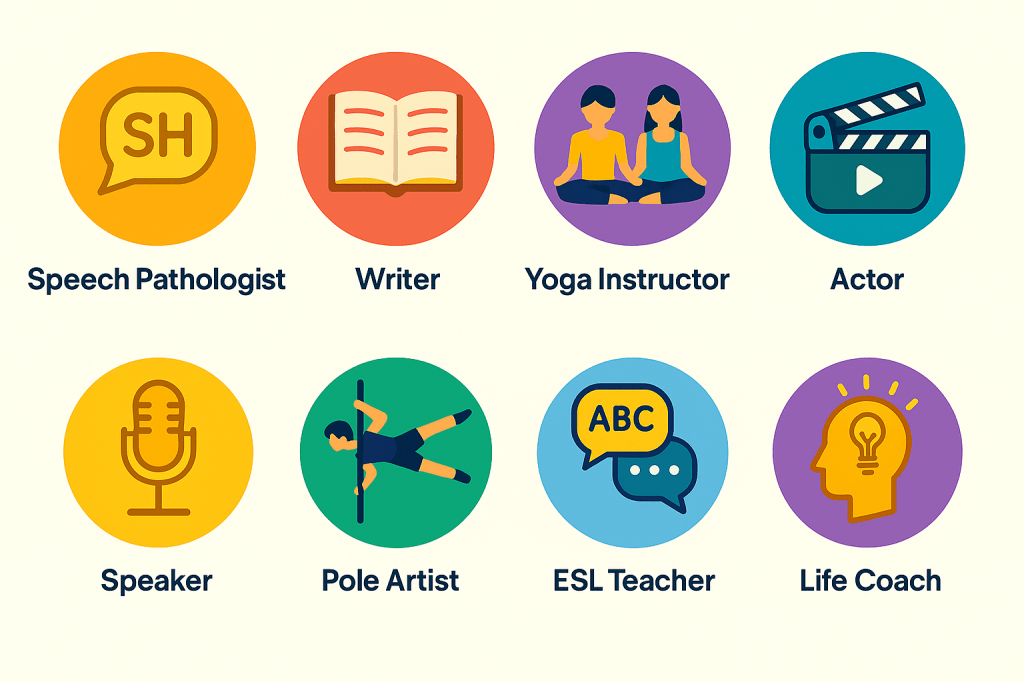
I’ve never been someone who fits neatly into one box. I’m a speech pathologist, a writer, a life coach, an actor, a yoga teacher, an ESL educator, a business owner, and yes, someone who hangs upside down on a pole for fun.

And somehow… it all makes perfect sense to me.

Being a polymath feels like living in colour. Every skill I learn feeds another part of my life. Every curiosity becomes a doorway. Every new passion adds a layer to who I am and how I show up in the world.

Speech Pathology taught me to communicate with purpose

Working with kids and families has given me the deepest understanding of communication, not just the mechanics, but the heart behind it. Helping someone speak, read, learn, or connect unlocks something inside me too.

Life coaching taught me to listen, REALLY listen

Coaching helped me tune in to people’s dreams, fears, habits, and patterns. It made me a better therapist, a better friend, and honestly, a better human. It’s one of the skills that anchors everything else I do.

Acting taught me to feel everything fully

Acting is where I get to be bold, expressive, vulnerable, and creative in ways everyday life doesn’t always allow. It’s helped me understand characters, emotions, humanity – which loops right back into my coaching and therapy work.

Writing taught me to make sense of the world

Words are how I process life. From “The Speakable Child” to the new projects I’m creating, writing lets me turn ideas into stories, and stories into something useful for someone else.

Yoga taught me to breathe and soften

Yoga balances the fire. It reminds me to slow down, feel my body, and come back to myself, something all polymaths need because our brains can be like hummingbirds.

Pole art taught me strength, discipline, and play

Pole is where I surprise myself the most. The strength, the flow, the artistry; it’s a celebration of being human. It’s creative and athletic at the same time, and it’s one of the places where I feel the most free.

Business taught me courage

Speakable didn’t build itself. It took years of ideas, risks, failures, and growth. Being an entrepreneur showed me that creativity isn’t just an art; it’s a strategy.

What I love most about being a polymath

It’s not the titles or the skills.

It’s the way everything overlaps.

My acting improves my communication coaching.

My coaching improves my therapy.

My therapy work gives depth to my writing.

My writing clears my mind for yoga.

Yoga strengthens my discipline for pole.

Pole energises me for everything else.

It’s all connected like a tapestry of passions that weave together into one life.

I love being a polymath because it lets me be all of me.

Not half. Not one slice.

All.

And if there’s one message I hope people take from my journey, it’s this:

You don’t need to choose one dream.

You’re allowed to choose many and let them shape you into something extraordinary.

Binh

From Idea to Impact: 11 Lessons in 11 Years of Speakable

This year, we celebrate 11 years of Speakable Speech Pathology – a milestone that reminds us how far a simple idea can grow when it’s backed by passion, persistence, and purpose. 

When I first started Speakable in 2014, I couldn’t have imagined the incredible journey it would become. What began as a vision to help children find their voice has grown into a thriving practice that impacts families every day.

Along the way, we’ve learned a lot about what it takes to build not just a business, but a mission-driven start-up that lasts. 

To celebrate, I’d like to share 11 lessons from 11 years that shaped Speakable and can help guide anyone dreaming of starting something of their own.

1. Start with purpose

The heart of any successful start-up is a clear “why.” For Speakable, it was simple: helping children become confident communicators and learners. Purpose fuels resilience – it’s what keeps you going when things get hard.

2. Solve a real problem

A start-up only works if it addresses a genuine need. Parents were searching for practical, evidence-based strategies to support their children’s speech and language. Speakable was built to fill that gap with accessible, personalised solutions.

3. Begin small, dream big

Speakable didn’t begin with a full team, branded office, or polished systems. It started with a commitment to serve (and a small table). Growth followed naturally as we stayed focused on helping one family at a time.

4. Build relationships, not just clients

Our growth has always come from word-of-mouth referrals and long-term relationships. People don’t just buy services as they invest in trust, care, and genuine connection.

5. Adapt and evolve

The pandemic taught us this lesson most vividly. We pivoted to online services, developed new resources, and found ways to support families remotely. Flexibility kept us relevant and resilient.

6. Hire for heart and skill

As Speakable grew, so did our team. We learned to bring in people who not only had the expertise, but also shared the same vision and values. Culture is the backbone of a strong start-up.

7. Keep learning

Running a business means wearing many hats. At the start, I was a clinician, a marketer, a manager, a technician, a cleaner and a coach. I invested in learning constantly, whether it was professional development, business strategy, or leadership training.

8. Celebrate small wins

Every milestone matters. From a child saying their first word to expanding our clinic, celebrating progress kept the journey joyful.

9. Stay financially grounded

Growth is exciting, but sustainability requires careful planning. From reinvesting profits to setting fair fees, keeping Speakable financially healthy ensured we could keep serving families long-term.

10. Give back

Success isn’t just measured in profit – it’s about impact. Speakable has always been about more than therapy sessions. It’s about empowering parents, training future clinicians, and sharing knowledge through workshops and writing.

Over the years, we’ve also extended our impact by supporting charities such as the World Food Programme, Blue Dragon Children’s Foundation, and One Tree Planted. Giving back has been an essential part of our journey because true success comes from creating ripples of change beyond your own business.

11. Never lose sight of the vision

Through every challenge, from long hours to unexpected changes, the vision of Speakable – to give children a voice – has been the guiding light. That vision has kept us grounded, inspired, and moving forward.

Looking ahead

Eleven years in, Speakable is stronger than ever. The road hasn’t always been easy, but it has been worth it. If there’s one message I’d share with anyone starting a new venture, it’s this: anchor yourself in purpose, stay adaptable, and keep learning.

Here’s to the next chapter, and to every dreamer ready to turn their idea into something remarkable.

Big hugs, 

Bình 

10 Life Lessons I Learned Working in Hospitality During Uni

Back when I was living in Brisbane for university, I worked part-time at a family-run restaurant to help cover my expenses. What started as a casual job to pay the bills turned into one of the best experiences of my life.

I spent four years waiting tables at a busy Vietnamese restaurant and in that time, I learned lessons about people, resilience, and real-world problem-solving that no university course could have taught me.

Here are ten lessons that I’ve learned:

1. Service is an attitude, not just a task

Being a good waiter wasn’t just about delivering food – it was about being present, attentive, and kind, even when I was exhausted. I learned that how you make someone feel is just as important as what you serve them.

2. People remember how you treat them

From customers celebrating special occasions to tired parents just needing a night off from cooking, each interaction mattered. A warm smile or remembering a regular’s order made a big impact and often led to better tips too!

3. Multitasking is a skill you can master

Juggling ten tables, a full drinks tray, and a mental list of who needed what taught me to prioritise, stay calm under pressure, and move fast without panicking. That ability to multitask has helped me in every job since.

4. Clear communication prevents chaos

Misheard orders, wrong table numbers, or unclear notes for the kitchen could snowball into unhappy customers and wasted food. I quickly learned to communicate clearly and double-check everything. These are the skills I now use daily.

5. It’s never personal

Not all customers were kind. Some were rude, impatient, or dismissive. Learning not to take it personally helped me stay grounded, professional, and focused on doing my job well without carrying emotional baggage into the next table.

6. Cultural pride can be found in the smallest moments

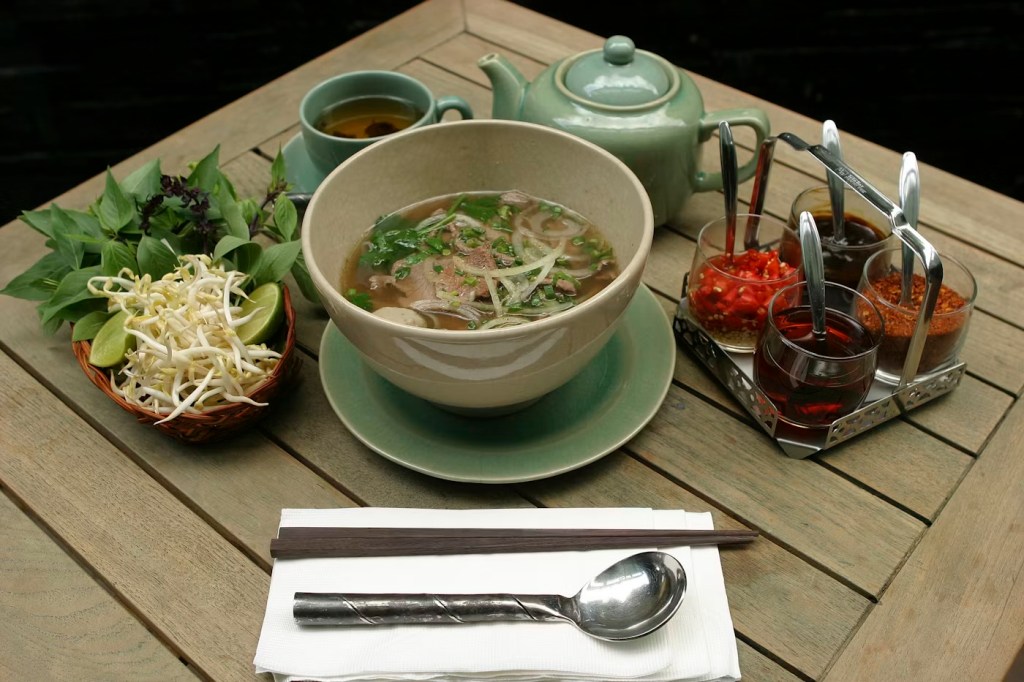
Working in a Vietnamese restaurant gave me the chance to proudly share my culture with people who may have been trying dishes like pho, bun bo hue, or goi cuon for the first time. I loved explaining the ingredients, the stories behind dishes, and why certain sauces were paired with specific foods.

7. Listening is a superpower

I got better at reading the room, noticing when someone needed help, or just giving space to people having a rough day. Listening with my ears, eyes, and instincts made me better at connecting with people from all walks of life.

8. A strong team makes all the difference

You can’t run a busy floor alone. We backed each other up, swapped shifts, and helped clear each other’s tables. There was no ego but just teamwork, trust, and a shared goal to make each night run smoothly.

9. Respect the hustle behind the scenes

The chefs who prepped broth from 6am. The owner who handled the books after hours. The kitchenhands who stayed late to clean. Seeing their dedication helped me appreciate the value of hard work and what it really takes to run a small business.

10. The smallest moments leave the biggest impressions

A quiet thank-you. A small tip from a regular. A child who gave me their drawing as a “tip.” These moments reminded me that even in a fast-paced, often thankless job, there’s always space for human connection and joy.


Working in hospitality in Brisbane while studying wasn’t easy, but it taught me grit, grace, and gratitude. It grounded me. It connected me with people I never would’ve met otherwise. Most importantly, it gave me life skills I still use today in business, relationships, and everyday life.

If you’ve ever worked in a restaurant, you’ll understand – you walk in for a paycheck, but if you pay attention, you leave with so much more. Those years taught me that no job is ever “just a job” as every experience, if you let it, shapes who you become.

Bình

If you believe: Finding my voice in a new country

When I was 15, I moved to Australia from Vietnam, and honestly, it was rough.

I didn’t speak much English. I was shy. Everything felt different and unfamiliar. I’d sit in class, trying to keep my head down, hoping no one would notice me. Not because I didn’t care – I just didn’t know how to join in. I had so many thoughts but couldn’t really find the words to express them.

At times, it felt like my voice was stuck somewhere deep inside, and I didn’t know how to bring it out.

But something in me wouldn’t quit. Maybe it was the thought of my family, who gave up so much to get me here. Maybe it was just that quiet belief that somehow, I could figure it out. So I kept going.

I studied harder than ever. I asked questions, even when it made me uncomfortable. I read everything I could. I slowly pushed through the fear and the awkwardness. One step at a time.

Eventually, I started to get it. I made it through high school. Then I went on to uni. Then, against all odds, I became a biomedical scientist.

But my journey didn’t stop there.

Because of what I went through – struggling with language, confidence, and connection – I felt drawn to help others who might feel the same. So, I became a speech pathologist. Fast forward to today, I now run my own clinic in Sydney, supporting kids and families to find their voice, build their confidence, and feel heard.

It’s crazy to think back to that quiet 15-year-old version of me, the one who felt lost and unsure. He wouldn’t believe where we are now.

But that’s the thing. You don’t need to have it all figured out at once. You just need to take the next step. And then the next.

If there’s one thing I’ve learned, it’s this: when you believe in yourself, even just a little, you can overcome way more than you think.

So, if you’re struggling right now, or feeling like you’re behind, or like you don’t belong – keep going.

You’ve got more strength in you than you know.

And if you believe in yourself, even a tiny bit, that’s enough to start.

Hugs & peace,

Bình

From Passion to Practice: 8 Lessons Learned in 11 Years of Business

Have you ever wondered what it takes to turn a childhood interest in business into a flourishing speech pathology practice? Growing up, I was more fascinated by the hustle of helping my parents with their business in Vietnam than by any school lesson. This early experience sparked a love for entrepreneurship that eventually led me to start Speakable Speech Pathology in 2014 in Sydney, Australia. 

Over the past decade or so, I’ve picked up a few key lessons that have not only shaped how I approach my profession but have also deeply enriched my personal life. 

Here are 8 big takeaways from my journey:

1. Relationships are everything

At our practice, it’s all about more than just the usual appointments; it’s about building real, meaningful connections. We treat everyone who walks through our door like family. This friendly vibe helps everyone feel included and supported, not just during sessions but as part of our bigger family circle. It’s cool to see how this turns our clients into friends who really get involved and feel connected to what we do at Speakable.

2. Stay flexible

During the COVID-19 pandemic, we quickly adapted by transitioning to telehealth services. This not only kept our practice running but also demonstrated our commitment to our clients’ progress and well-being under any circumstances. Flexibility in therapy approaches, like incorporating more digital tools or adjusting strategies based on client feedback, has also been crucial.

3. Never stop learning

My team and I personally take courses annually on the latest developments in speech & language pathology which has tremendously enhanced the therapy sessions we offer. Staying updated through continual education ensures that we are equipped with the most effective and innovative therapy techniques.

4. Set boundaries for a healthy work-life balance

Learning to set boundaries early on was essential. For example, I make it a point to not schedule clients after 6 PM so that I can have evenings with my friends, family and other hobbies. This helps maintain a sustainable work-life balance and prevents burnout.

5. Broaden your horizons

We diversified our services by introducing group therapy sessions and workshops for parents on how to support speech development at home. This not only helped stabilize our revenue streams but also catered to a broader segment of our community, enhancing our practice’s impact.

6. Get involved locally

Participating in local health fairs and school events has significantly boosted our practice’s visibility and reputation. By offering free screenings and workshops, we’ve been able to demonstrate our commitment to community wellness and draw in new clients who are looking for trusted local services.

7. Embrace technology

Investing in an integrated practice management software revolutionized how we handle appointments, billing, and client records. This technology has not only streamlined administrative tasks but also improved client satisfaction through smoother processes.

8. Feedback is gold

We regularly collect feedback through surveys at the end of each therapy cycle. This has been instrumental in fine-tuning our services. Celebrating positive feedback and addressing constructive criticism transparently has helped foster a culture of continuous improvement.

Running a speech pathology business is so much more than a day job—it’s a never-ending adventure of growth and discovery. These 8 lessons we’ve shared are just the beginning. Each day brings new challenges and opportunities that push us to learn more, do better, and think bigger. I’m really pumped to see where these insights will lead us and how they’ll help us make an even bigger impact. 

What kind of business are you running or thinking of starting? How do you see it evolving? Let’s inspire each other with our stories and ambitions!

Binh

Finding Balance: Juggling It All

So, you’re wondering how I manage everything from stand-up comedy classes and acting, to pole fitness, jiu-jitsu, and a full-time gig in speech pathology? Well, it’s definitely a mix of fun and frantic, but here’s how I keep things rolling without dropping the ball.

1. Setting goals

Each activity I’m into has its own vibe and purpose. Comedy keeps me on my toes, acting builds my empathy, pole and jiu-jitsu keep me fit, and my day job? Well, that’s where I get to make a real difference helping people communicate. I set clear goals for each to make sure they’re not just random things I do, but integral parts of who I am and want to be.

2. Time management

This is key. I’ve got a digital calendar that’s color-coded and blocked out for each activity. It sounds a bit much, but it helps me ensure I’m dedicating enough time to each without overbooking myself.

3. Self-care

Can’t stress this enough. With a schedule like mine, running out of juice is a real risk. So, I make sure to get enough sleep, eat right, weekly massages, and throw some yoga/mindfulness into the mix. It keeps my energy up so I can keep up with everything I’ve set out to do.

4. Stay flexible

Plans change and so do my energy levels. Some days, the best move is to skip the gym for some extra downtime. Being flexible means I can adjust on the go, which keeps me from burning out.

5. Connect the dots

Linking what I learn and experience in one area of my life to others helps too. The confidence from acting and comedy? It’s gold when I’m at work. Everything feeds into everything else in some way.

6. Lean on your squad

It’s tough to manage all this on your own. I’ve got friends, fellow hobbyists, and co-workers who get the hustle. They’re great for bouncing ideas off or venting when things become difficult.

7. Check-in with yourself

Every now and then, I take a step back to see what’s working and what’s not. It’s about being honest with myself and tweaking things if something feels off, like cutting back on an activity that no longer fits.

Balancing a bunch of passions with work is crazy but fulfilling. It’s all about enjoying the ride without getting overwhelmed. Organize, prioritize, and be ready to adapt. That’s how you make it work without losing your cool.

Comment below if you have any other tips and tricks.

Cheers,

Binh

Empowering voices, Enriching lives

8 Ways to Relate Well to Children

After working with children for a number of years in the speech pathology industry, I’ve been able to learn how to relate well to them.

Building rapport with children involves communicating effectively, understanding their needs and creating a positive connection.

Here are some tips that you might find helpful when interacting with the little ones:

With one of my students at Speakable Speech Pathology (Permission to post given by parents)

1. Show genuine interest: Take a sincere interest in what children have to say. Ask them questions, listen and respond with enthusiasm. Show that you value their opinions and thoughts.

2. Use age-appropriate language: Change your language and vocabulary to suit the child’s comprehension level and age. Avoid using complex terms when explaining things. Speak clearly and use simple words to ensure their understanding.

3. Active listening: Give children your full attention when speaking to them. Maintain eye contact, nod, and respond appropriately. This shows them that you are listening and that their words matter.

4. Respect their feelings: Children experience a wide range of emotions. Acknowledge their feelings, whether negative or positive, and validate them. Help them understand and express their emotions in healthy ways.

5. Be patient and understanding: Children may take time to express themselves or understand certain concepts. Be patient and give them time and space to process their thoughts. Offer your support when needed. Avoid rushing or dismissing their concerns.

6. Play and engage: Children learn through play and engaging activities. Join in their playtime, participate in their games, and encourage their creativity. This creates a sense of connection and makes them feel valued.

7. Use positive reinforcement: Praise and reward them for their efforts and achievements. Focus on their strengths and encourage their progress. Positive reinforcement boosts their self-confidence and motivates them to continue learning and growing.

8. Be a role model: Children often observe and imitate the behavior of adults around them. Demonstrate respect, kindness, empathy, and good manners. Model positive behavior and values to set a good example for them.

Ultimately, every child is unique and it’s important to adapt these tips to suit their individual needs and personalities. Building a strong relationship with children takes time and effort, but the rewards are invaluable.

Thank you for reading,

Bình