What Chess Has Taught Me About Life

I’ve loved chess for as long as I can remember.

I’m not a grandmaster, and I don’t play tournaments every weekend. I simply enjoy the game. Whenever life gets busy, I find myself coming back to the chessboard. It slows me down and reminds me to think.

Over the years, I’ve realised that many of the lessons I’ve learned from chess have quietly shaped the way I live.

The biggest one is this: you can’t control everything.

You can study openings, have a plan, and feel confident about your position. Then your opponent makes a move you never expected. Suddenly, you have to adapt.

Life has been like that for me.

When I moved to Australia as a teenager, I didn’t know where life would take me. I certainly didn’t imagine I’d become a speech pathologist, start my own business, write a book, teach yoga or begin acting in my later years.

None of those things were part of some master plan. They were simply the next move.

One thing chess has also taught me is not to rush.

When I play too quickly, I usually regret it. The moves that look exciting at first often turn out to be the wrong ones. The same has happened in life. Some of my best decisions came after taking time to reflect instead of reacting.

I’ve also learned that losing isn’t something to fear.

I’ve lost plenty of games. Sometimes I knew exactly where I went wrong. Other times I didn’t see my mistake until much later. Instead of getting frustrated, I’ve started asking myself, “What can this game teach me?”

I’ve tried to carry that mindset into everyday life. Not every audition has gone my way. Not every business decision has been perfect. Some ideas have worked beautifully, while others haven’t. Looking back, I’ve probably learned more from the disappointments than the successes.

Another thing I love about chess is that every piece matters.

Most people notice the queen because she’s the strongest piece. But I’ve won games because of a single pawn that quietly made its way across the board. That reminds me not to underestimate the small things.

For instance: reading a few pages each day, practicing yoga even when I don’t feel like it or calling a friend.

Those small habits rarely feel significant in the moment, but over time they change who we become.

Perhaps my favourite lesson is that the game isn’t over until it’s over.

I’ve seen players come back from positions that looked impossible. As long as they kept thinking, there was always another move to make.

I think that’s a comforting thought.

No matter where we are in life, we always have a next move. We can’t change the moves we’ve already made, but we can choose the next one.

Maybe that’s why I keep coming back to chess. It reminds me to slow down, stay curious, accept mistakes, and trust that one thoughtful move is often enough.

Life doesn’t require a perfect strategy. It simply asks us to keep playing.

I’d love to hear your thoughts. Has chess or another hobby taught you something unexpected about life?

Until next time,

Binh

♟️

10 Lessons I Learnt Living Away From My Family at 15

At 15 years old, I left Vietnam and came to Australia to study.

I still remember the mix of excitement and fear. On one hand, I was grateful for the opportunity to build a better future. On the other, I was leaving behind everything I had ever known, my family, my friends, my language, and my culture.

When you’re 15, most people are worrying about school exams, sports, or what they’re doing on the weekend. I was learning how to navigate a completely new country with limited English and without my family by my side.

Looking back now, I realise that the experience shaped who I am today. It taught me lessons about resilience, independence, and gratitude that no textbook could ever teach.

Here are ten of the most valuable lessons I learnt.

1. You Are Stronger Than You Think

When life becomes difficult, you often discover strengths you never knew you had.

There were many moments when I felt lost, homesick, and overwhelmed. Yet somehow, I kept moving forward. Each challenge I overcame built confidence and resilience.

We are often far more capable than we give ourselves credit for.

2. Growth Happens Outside Your Comfort Zone

Moving to Australia forced me out of my comfort zone every single day.

Everything was unfamiliar. The language sounded different. The culture was different. Even simple daily tasks required courage.

At the time it felt uncomfortable, but looking back, that discomfort became the catalyst for growth.

3. Family Is a Gift

You don’t truly understand the value of family until they are no longer around every day.

Living away from my parents taught me to appreciate their sacrifices. It made me realise how much love and support they had provided throughout my childhood.

Distance created a deeper sense of gratitude.

4. Loneliness Can Teach You Valuable Things

There were times when I felt incredibly alone.

Instead of constantly trying to escape those feelings, I gradually learnt how to sit with them. Loneliness taught me self-reliance, reflection, and emotional resilience.

It also taught me the importance of building meaningful relationships.

5. Communication Is More Than Perfect English

When I arrived in Australia, my English was limited.

There were many times when I couldn’t express myself the way I wanted. It was frustrating and sometimes embarrassing.

Over time, I realised that communication isn’t just about grammar or vocabulary. Confidence, persistence, body language, and a willingness to make mistakes are equally important.

Every conversation became a lesson.

6. Nobody Is Coming to Rescue You

One of the most important lessons I learnt was personal responsibility.

If I wanted better grades, I had to study.

If I wanted opportunities, I had to seek them out.

If I made mistakes, I had to learn from them.

That mindset became one of the foundations of my success later in life.

7. Hard Work Beats Talent

I wasn’t the smartest student in the room. I wasn’t the most confident speaker. I wasn’t naturally gifted at everything I tried.

But I learnt that consistent effort often matters more than natural ability.

Hard work opened doors that might otherwise have remained closed.

8. Failure Is Part of Success

There were plenty of setbacks along the way. I made mistakes. I misunderstood people. I struggled with language and confidence.

At the time, those moments felt like failures. Looking back, they were simply stepping stones.

Every setback taught me something valuable.

9. Your Story Is Your Strength

For a long time, I simply wanted to fit in.

As I’ve grown older, I’ve realised that my journey is not something to hide. Being Vietnamese, migrating to Australia, learning a new language, and overcoming challenges have all shaped who I am.

The experiences that once made me feel different are now some of my greatest strengths.

10. Keep Saying Yes to New Experiences

Moving to Australia at 15 taught me that growth often begins with a single brave decision.

Since then, I’ve continued saying yes to new experiences, whether that’s becoming a speech pathologist, starting a business, teaching yoga, performing on stage, competing at Toastmasters, or stepping into an improv class.

Life becomes richer when we’re willing to embrace the unknown.

Final Thoughts

Today, as a speech pathologist, business owner, coach, actor, and lifelong learner, I often think about that 15-year-old boy who left Vietnam and boarded a plane to Australia.

He had no idea what the future would hold. What he did have was courage.

Looking back, I realise that courage isn’t the absence of fear. Courage is taking the next step despite fear.

If you’re facing uncertainty in your own life, remember this: you don’t need to have everything figured out. You simply need to keep moving forward.

The challenges you face today may one day become the very stories that inspire others.

Keep growing, keep learning, and keep moving forward.


Binh

Building Confidence Through Discomfort

When I was 15, I moved to Australia from Vietnam.

I didn’t speak much English. I remember sitting in class, catching maybe 30% of what was going on… just trying to piece things together.
I definitely didn’t feel confident & felt behind.
And for a long time, I believed what most people believe: Confidence is something you either have… or you don’t.

The Myth of Confidence

We see confident people and think:
“They’re just like that.”
“They’ve always been good at speaking.”
“They’re naturally confident.”
But honestly… that’s rarely true. Confidence isn’t something you’re born with. It’s something you build.
I didn’t wake up one day and suddenly feel confident just because my English got better.
It came from doing things that felt uncomfortable over and over again. My first acting class in High School was very uncomfortable. Standing up, using my voice, showing emotion… I felt exposed.
Nothing about that felt “natural.”

What Actually Builds Confidence

Over time, I started noticing something. Confidence wasn’t random. It followed a pattern.

Here are the 3 things that made the biggest difference for me:

1. Repetition

Confidence comes from doing the thing… again and again. Not once. Not twice. Enough times that your brain goes: “Okay… I’ve been here before.”
Whether it’s speaking, performing, or even just sharing your opinion, the first few times are always awkward. But after 10, 20, 50 times? You start to settle into it.

2. Getting Comfortable Being Uncomfortable

Most people avoid the exact thing that would make them more confident such as speaking up, being seen and putting themselves out there.
I kind of forced myself to lean into it: acting classes, auditions, and performing. I wasn’t trying to be amazing but just trying to stay in it… a little longer each time. That’s where the shift happens.

3. Building Actual Skill

Confidence without skill doesn’t last. Real confidence comes from knowing: “I’ve put in the work.” The more I trained in acting, communication and coaching, the more solid I felt. Not fake confidence. Not hype. Just… grounded confidence.

A Moment That Changed Everything

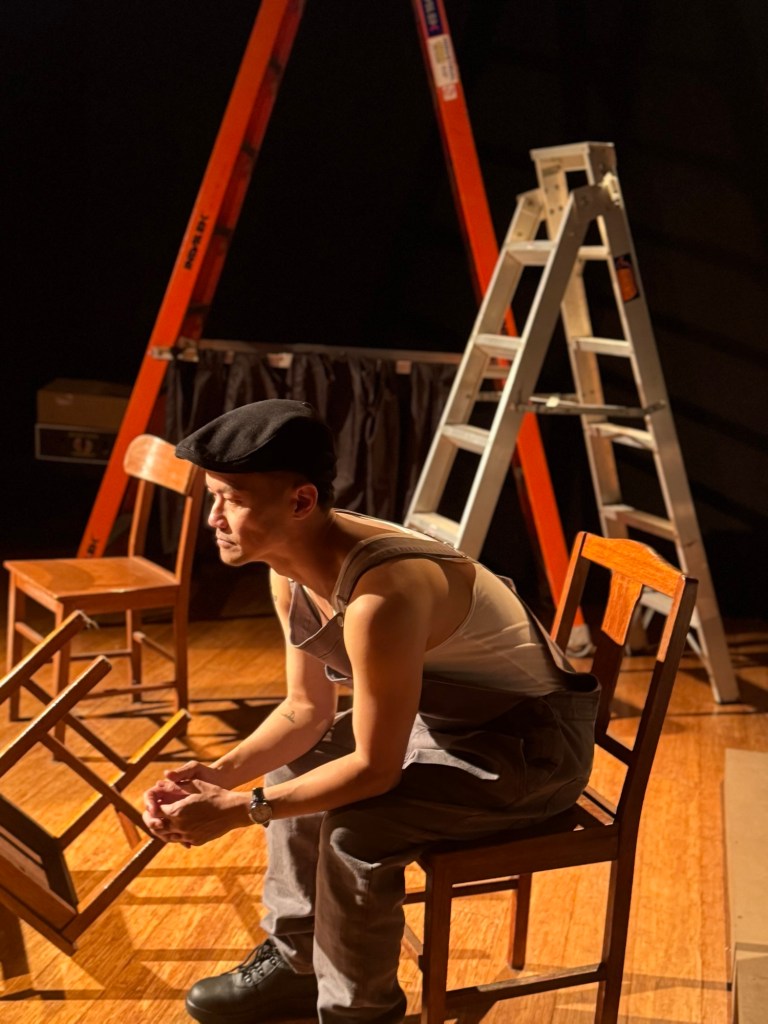
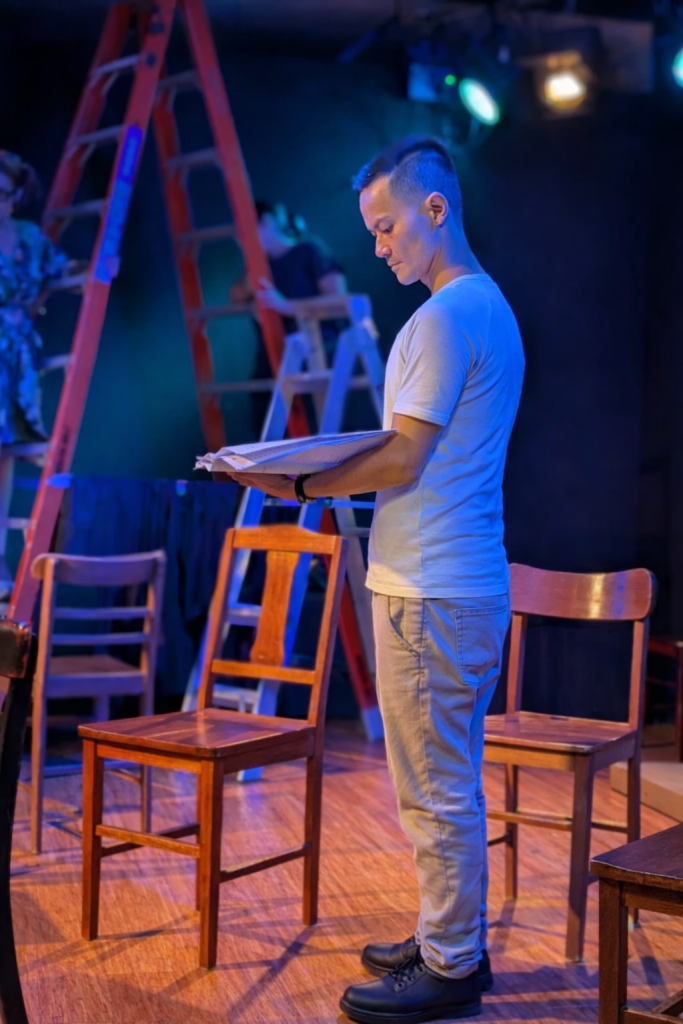
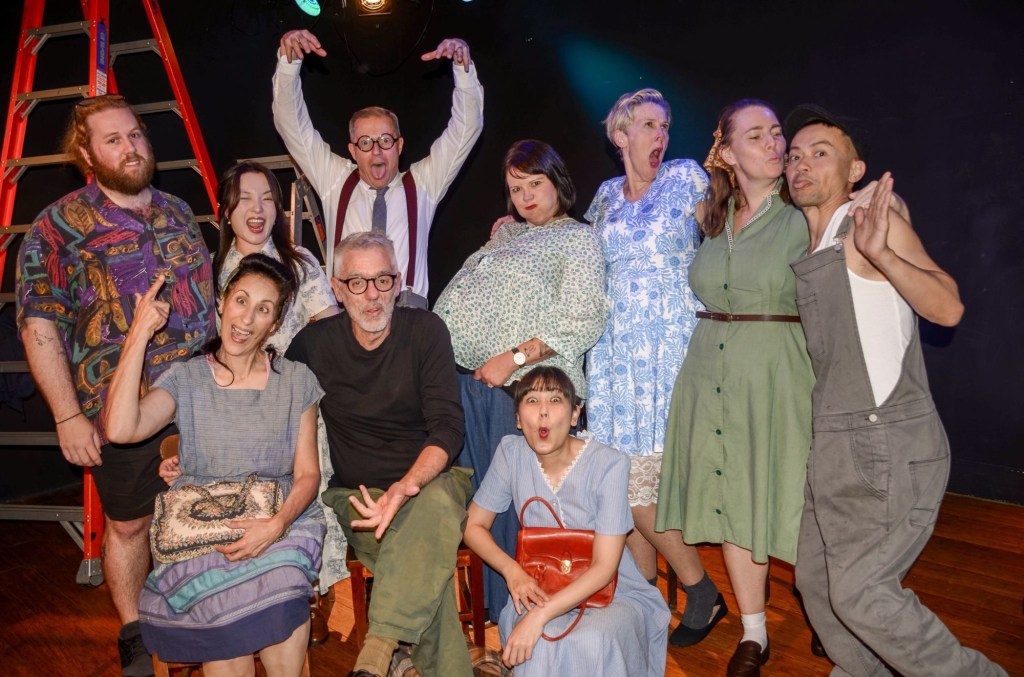
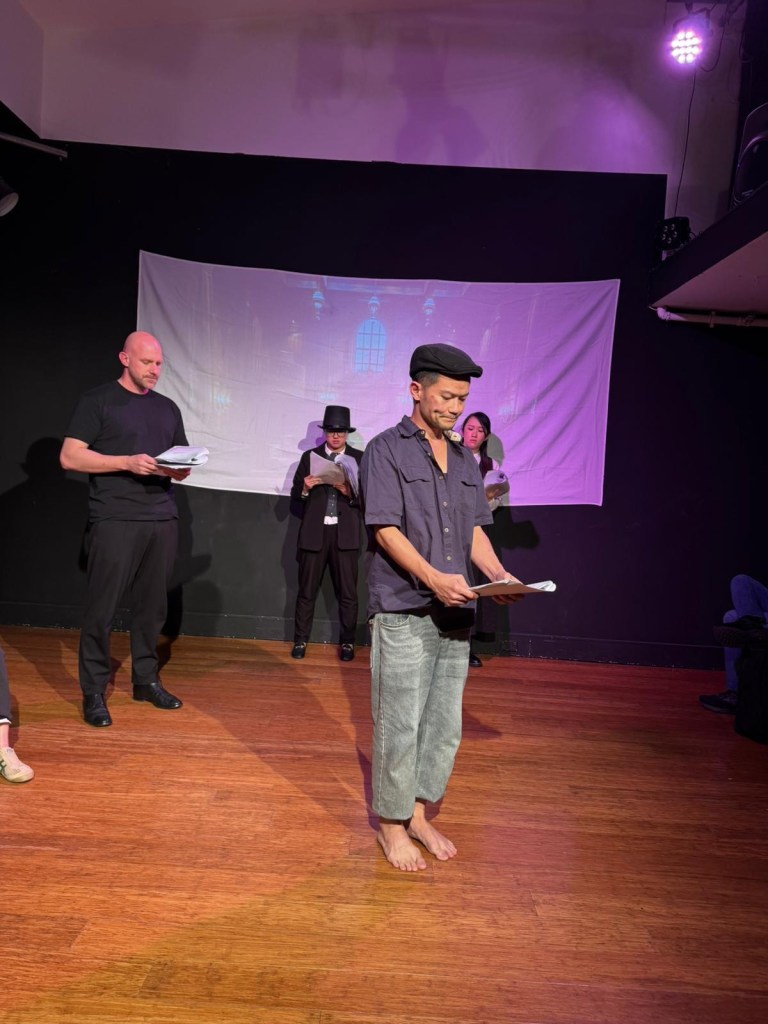
I recently performed in Bobbin Up. On closing night, something clicked. I wasn’t rushing. I wasn’t trying to “act confident.” I just slowed everything down.
In one of the main scenes — the hotel scene — I felt completely in control.
And the thing is… that didn’t come from nowhere.
It came from all the rehearsals, all the line runs, all the small details I worked on. That’s what confidence actually looks like. Not loud. Not forced. Just… there.

What You Can Do (Starting This Week)

If you’re waiting to feel confident before you do something… you might be waiting forever.
Try this instead:

  1. Do one uncomfortable thing this week
    Say something. Speak up. Put yourself out there.
  2. Do it again next week, and the week after.
  3. Focus on one small thing, not “be confident” as that’s too vague. Try speaking a bit slower, finishing your sentence clearly, or holding eye contact a bit longer. Small things repeated and that’s how confidence builds.

Final Thought

Confidence isn’t something you find. It’s something you build, one uncomfortable moment at a time.
If you keep stepping into those moments, you’ll realise something:
You were never lacking confidence. You just hadn’t trained it yet.

Keep training and confidence will come! 💪🏽

Binh