10 Lessons I Learnt Living Away From My Family at 15

At 15 years old, I left Vietnam and came to Australia to study.

I still remember the mix of excitement and fear. On one hand, I was grateful for the opportunity to build a better future. On the other, I was leaving behind everything I had ever known, my family, my friends, my language, and my culture.

When you’re 15, most people are worrying about school exams, sports, or what they’re doing on the weekend. I was learning how to navigate a completely new country with limited English and without my family by my side.

Looking back now, I realise that the experience shaped who I am today. It taught me lessons about resilience, independence, and gratitude that no textbook could ever teach.

Here are ten of the most valuable lessons I learnt.

1. You Are Stronger Than You Think

When life becomes difficult, you often discover strengths you never knew you had.

There were many moments when I felt lost, homesick, and overwhelmed. Yet somehow, I kept moving forward. Each challenge I overcame built confidence and resilience.

We are often far more capable than we give ourselves credit for.

2. Growth Happens Outside Your Comfort Zone

Moving to Australia forced me out of my comfort zone every single day.

Everything was unfamiliar. The language sounded different. The culture was different. Even simple daily tasks required courage.

At the time it felt uncomfortable, but looking back, that discomfort became the catalyst for growth.

3. Family Is a Gift

You don’t truly understand the value of family until they are no longer around every day.

Living away from my parents taught me to appreciate their sacrifices. It made me realise how much love and support they had provided throughout my childhood.

Distance created a deeper sense of gratitude.

4. Loneliness Can Teach You Valuable Things

There were times when I felt incredibly alone.

Instead of constantly trying to escape those feelings, I gradually learnt how to sit with them. Loneliness taught me self-reliance, reflection, and emotional resilience.

It also taught me the importance of building meaningful relationships.

5. Communication Is More Than Perfect English

When I arrived in Australia, my English was limited.

There were many times when I couldn’t express myself the way I wanted. It was frustrating and sometimes embarrassing.

Over time, I realised that communication isn’t just about grammar or vocabulary. Confidence, persistence, body language, and a willingness to make mistakes are equally important.

Every conversation became a lesson.

6. Nobody Is Coming to Rescue You

One of the most important lessons I learnt was personal responsibility.

If I wanted better grades, I had to study.

If I wanted opportunities, I had to seek them out.

If I made mistakes, I had to learn from them.

That mindset became one of the foundations of my success later in life.

7. Hard Work Beats Talent

I wasn’t the smartest student in the room. I wasn’t the most confident speaker. I wasn’t naturally gifted at everything I tried.

But I learnt that consistent effort often matters more than natural ability.

Hard work opened doors that might otherwise have remained closed.

8. Failure Is Part of Success

There were plenty of setbacks along the way. I made mistakes. I misunderstood people. I struggled with language and confidence.

At the time, those moments felt like failures. Looking back, they were simply stepping stones.

Every setback taught me something valuable.

9. Your Story Is Your Strength

For a long time, I simply wanted to fit in.

As I’ve grown older, I’ve realised that my journey is not something to hide. Being Vietnamese, migrating to Australia, learning a new language, and overcoming challenges have all shaped who I am.

The experiences that once made me feel different are now some of my greatest strengths.

10. Keep Saying Yes to New Experiences

Moving to Australia at 15 taught me that growth often begins with a single brave decision.

Since then, I’ve continued saying yes to new experiences, whether that’s becoming a speech pathologist, starting a business, teaching yoga, performing on stage, competing at Toastmasters, or stepping into an improv class.

Life becomes richer when we’re willing to embrace the unknown.

Final Thoughts

Today, as a speech pathologist, business owner, coach, actor, and lifelong learner, I often think about that 15-year-old boy who left Vietnam and boarded a plane to Australia.

He had no idea what the future would hold. What he did have was courage.

Looking back, I realise that courage isn’t the absence of fear. Courage is taking the next step despite fear.

If you’re facing uncertainty in your own life, remember this: you don’t need to have everything figured out. You simply need to keep moving forward.

The challenges you face today may one day become the very stories that inspire others.

Keep growing, keep learning, and keep moving forward.


Binh

Building Confidence Through Discomfort

When I was 15, I moved to Australia from Vietnam.

I didn’t speak much English. I remember sitting in class, catching maybe 30% of what was going on… just trying to piece things together.
I definitely didn’t feel confident & felt behind.
And for a long time, I believed what most people believe: Confidence is something you either have… or you don’t.

The Myth of Confidence

We see confident people and think:
“They’re just like that.”
“They’ve always been good at speaking.”
“They’re naturally confident.”
But honestly… that’s rarely true. Confidence isn’t something you’re born with. It’s something you build.
I didn’t wake up one day and suddenly feel confident just because my English got better.
It came from doing things that felt uncomfortable over and over again. My first acting class in High School was very uncomfortable. Standing up, using my voice, showing emotion… I felt exposed.
Nothing about that felt “natural.”

What Actually Builds Confidence

Over time, I started noticing something. Confidence wasn’t random. It followed a pattern.

Here are the 3 things that made the biggest difference for me:

1. Repetition

Confidence comes from doing the thing… again and again. Not once. Not twice. Enough times that your brain goes: “Okay… I’ve been here before.”
Whether it’s speaking, performing, or even just sharing your opinion, the first few times are always awkward. But after 10, 20, 50 times? You start to settle into it.

2. Getting Comfortable Being Uncomfortable

Most people avoid the exact thing that would make them more confident such as speaking up, being seen and putting themselves out there.
I kind of forced myself to lean into it: acting classes, auditions, and performing. I wasn’t trying to be amazing but just trying to stay in it… a little longer each time. That’s where the shift happens.

3. Building Actual Skill

Confidence without skill doesn’t last. Real confidence comes from knowing: “I’ve put in the work.” The more I trained in acting, communication and coaching, the more solid I felt. Not fake confidence. Not hype. Just… grounded confidence.

A Moment That Changed Everything

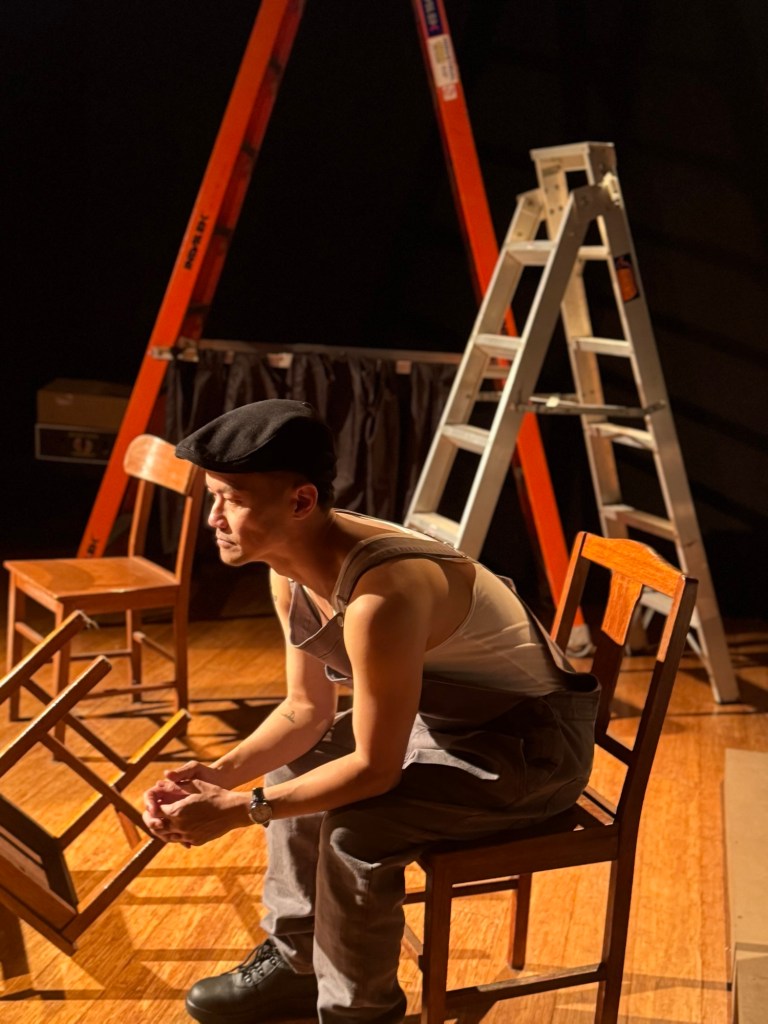
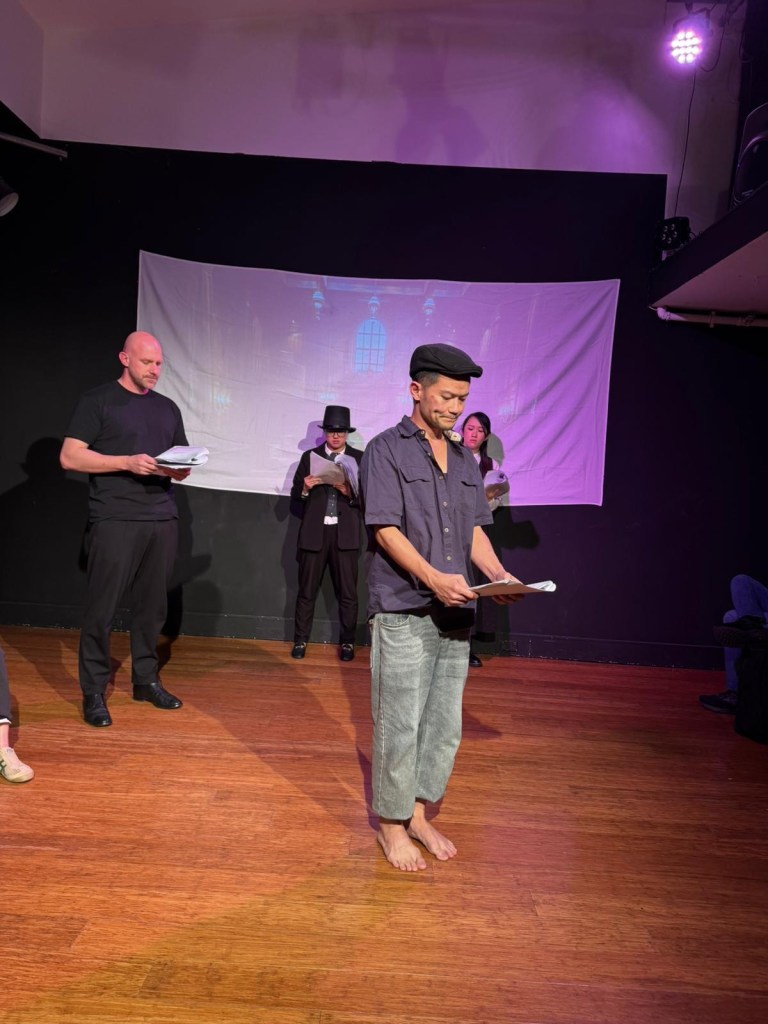
I recently performed in Bobbin Up. On closing night, something clicked. I wasn’t rushing. I wasn’t trying to “act confident.” I just slowed everything down.
In one of the main scenes — the hotel scene — I felt completely in control.
And the thing is… that didn’t come from nowhere.
It came from all the rehearsals, all the line runs, all the small details I worked on. That’s what confidence actually looks like. Not loud. Not forced. Just… there.

What You Can Do (Starting This Week)

If you’re waiting to feel confident before you do something… you might be waiting forever.
Try this instead:

  1. Do one uncomfortable thing this week
    Say something. Speak up. Put yourself out there.
  2. Do it again next week, and the week after.
  3. Focus on one small thing, not “be confident” as that’s too vague. Try speaking a bit slower, finishing your sentence clearly, or holding eye contact a bit longer. Small things repeated and that’s how confidence builds.

Final Thought

Confidence isn’t something you find. It’s something you build, one uncomfortable moment at a time.
If you keep stepping into those moments, you’ll realise something:
You were never lacking confidence. You just hadn’t trained it yet.

Keep training and confidence will come! 💪🏽

Binh

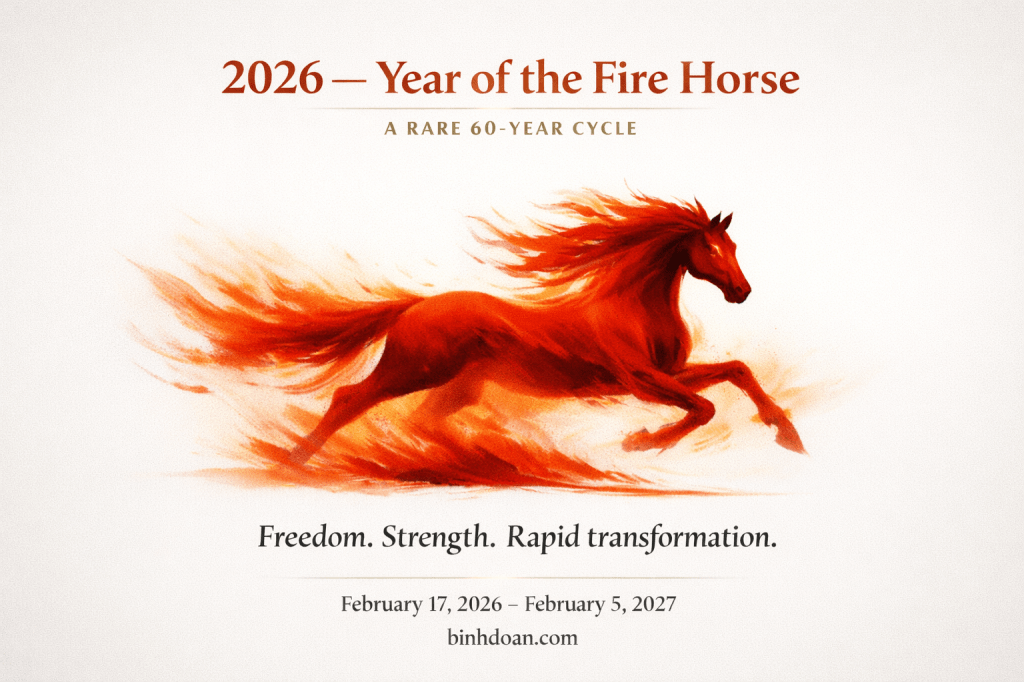
2026: The Year of the Fire Horse

I don’t usually buy into labels for years, but every now and then, something lands and it makes me pause.

2026 is the Year of the Fire Horse – a rare cycle that only comes around every 60 years. Whether you believe in astrology or not, the symbolism feels… accurate.

To me, this doesn’t feel like a slow year. It doesn’t feel like a year for overthinking.

It feels like a year for movement.

The Fire Horse is often described as freedom and strength. Freedom isn’t about quitting everything or burning it all down.

It’s quieter than that.

Freedom is finally saying what you mean, stopping the constant self-editing and choosing what matters instead of what looks good.

It’s not dramatic. It’s honest.

A few years ago, I thought strength meant doing more, working harder, pushing through, and holding it all together.

Now I think strength looks like knowing when to slow down, letting things be unfinished and trusting that you don’t need to prove anything.

This shift didn’t happen overnight. It came from listening to my body, my work, my relationships, and the moments where something felt off even when it “looked right”.

Fire Horse years are meant to be about rapid change, but not the chaotic kind.

It’s more like when something finally clicks, when a decision stops feeling heavy and when you move because you’re ready, not because you’re scared.

I don’t feel the need to reinvent everything in 2026.

I feel the need to commit.

To fewer things.

To clearer values.

To showing up more fully where I already am.

If I had to carry one question into 2026, it would be this:

What would change if I trusted myself a little more?

Not overnight.

Not perfectly.

Just enough to take the next step without talking myself out of it.

Here’s to 2026 🔥

🔥 a year of movement without rushing

🔥 strength without forcing

🔥 and freedom that actually feels like home.

Have a fantastic year, everyone!

Binh

The Quiet Space Between Years

There’s a strange, gentle pause that lives between Christmas and New Year.

The emails slow.

The noise softens.

Time feels less demanding.

It’s not quite the end, and not quite the beginning.

And I think we rush this space too often.

We’re quick to label the year as good or bad.

We want neat summaries, clean lessons, tidy growth.

But real life isn’t bullet-pointed.

Some things this year were clear wins.

Some were quiet losses no one else noticed.

Some are still unfinished and that doesn’t mean they failed.

I’ve learned that reflection doesn’t always need answers.

Sometimes it just needs honesty.

Not What did I achieve?

But What did I carry?

What did I carry when things felt uncertain?

What did I carry when motivation dipped?

Growth isn’t always loud.

Often it looks like staying.

Like pausing.

Like choosing not to quit on yourself.

As this year closes, I’m not rushing to redesign my life.

I’m simply acknowledging it.

The effort.

The stretch.

The stillness.

The becoming.

If you’re reading this in that in-between space – tired, reflective, hopeful, unsure, then you’re exactly where you need to be.

You don’t need a new version of yourself by midnight.

You don’t need a perfect plan.

You’re allowed to arrive in the new year as you are.

Quietly.

Honestly.

Intact.

Wishing you a steady and kind year ahead.

Bình

Krabi, Thailand

Why I Don’t Do New Year Resolutions Anymore

Every January, we’re encouraged to reset our lives.

New habits.

New goals.

A better version of ourselves.

For a long time, I played along. But over time, I’ve stepped away from New Year resolutions, not because growth doesn’t matter, but because the way we frame change matters more than we realise.

Resolutions are built on pressure.

Most resolutions rely on discipline and willpower, as if these are unlimited resources. They rarely account for fatigue, emotional load, unexpected events, or the complexity of real life.

When a resolution falls apart, the story becomes personal: I didn’t try hard enough.

Rarely do we question whether the plan itself was realistic.

A calendar date doesn’t create readiness.

Change doesn’t happen because the year changed.

Readiness comes from awareness, capacity, timing, and support. January can be reflective, quiet, or simply about regaining balance. Expecting transformation on demand ignores how change actually works.

The all-or-nothing trap!

Resolutions often create rigid rules.

Miss a day, and the momentum disappears. Miss a week, and the resolution feels broken. This pattern leads to guilt, then avoidance, rather than sustainable growth.

Real change is adaptive, not absolute.

What I choose instead:

Instead of resolutions, I choose direction.

Direction allows flexibility. It adjusts to hard weeks and changing circumstances.

Rather than asking “What must I achieve?” I ask: What do I want more of this year? What do I want less of? What needs protecting?

This creates movement without pressure.

Process over outcomes.

Outcomes are visible. Processes are transformative.

Rather than focusing on end results, I pay attention to:

How I structure my days. How I speak to myself. How I respond when plans change. How I return after pauses.

These shifts may look small, but they’re the ones that last.

A gentler alternative:

If resolutions don’t sit right with you, try this instead:

This year, I’m committed to supporting myself by ______.

For instance:

This year, I’m committed to supporting myself by…

…protecting my energy as carefully as my time.

…choosing consistency over intensity.

…allowing progress to be uneven without judging it.

No deadlines.

No streaks.

No failure.

Just intention and responsiveness.

Moving into the year differently.

You don’t need to reinvent yourself in January.

You don’t need a dramatic plan.

You need something that respects your capacity and allows growth at a human pace.

“Change happens not when we push harder, but when we listen more closely.”

Have a fantastic year ahead! 💫

Bình

12 Lessons 2025 Taught Me

From acting, business, pole, yoga, travel, and relationships

2025 wasn’t a year of dramatic reinvention.

It was a year of refinement.

It’s a year where different parts of my life – acting, running a business, pole, yoga, travel, and relationships quietly started talking to each other. Patterns repeated. Lessons echoed. And slowly, things began to integrate.

Here are 12 lessons 2025 taught me.

1. Craft beats talent every time

Acting reminded me of this daily.

Talent might get you noticed, but craft keeps you grounded, employable, and calm under pressure. The same applies to business, teaching, and even relationships as showing up prepared is an act of respect.

2. Consistency matters more than intensity

Pole training taught me that dramatic bursts lead to burnout.

Slow, steady practice especially on the days I didn’t feel like it created real progress. The body remembers what the ego forgets.

3. Boundaries are a form of generosity

In business, clearer boundaries didn’t reduce connection – they improved it.

Clients felt safer. I felt less depleted. Saying no early prevented resentment later.

4. Strength without softness is incomplete

Yoga reminded me that flexibility isn’t weakness.

The strongest shapes came when I stopped forcing and started listening on the mat and in life.

5. You don’t need to be everything to everyone

Acting rooms, auditions, and creative spaces reinforced this truth.

The goal isn’t to be right for everyone but to be specific. The right people find you when you stop trying to blend in.

6. Rest is productive even when it looks like nothing

Some of my best ideas arrived after pauses, not pushes.

Travel days, quiet mornings, moments of stillness – they weren’t wasted time. They were incubation.

7. Your body tells the truth faster than your mind

Pole and yoga made this undeniable.

Tension, fatigue, resistance – these signals appeared before my thoughts caught up. Learning to listen saved me from pushing past my limits unnecessarily.

8. Systems create freedom

In business, structure wasn’t restrictive – it was liberating.

Clear systems meant fewer decisions, less mental clutter, and more energy for creativity and connection.

9. Not every relationship is meant to last forever

Some relationships are seasonal.

2025 taught me to honour what was shared without forcing longevity. Letting go gracefully became a skill not a failure.

10. Confidence grows through repetition not affirmation

Whether on stage, on the pole, or in front of a room – confidence arrived after doing the thing many times, imperfectly.

11. Travel teaches humility

Different cultures, languages, and rhythms reminded me how small and connected we all are.

Travel softened my judgments and widened my patience.

12. Integration is the real work

The biggest lesson of 2025 wasn’t found in any single area.

It was in noticing how everything overlaps.

Acting sharpened my presence

Yoga grounded my nervous system

Pole strengthened my discipline

Business clarified my values

Relationships mirrored my growth

Travel expanded my perspective

Nothing existed in isolation anymore.

Closing reflection

2025 didn’t ask me to become someone new.

It asked me to become more whole.

Less proving.

More trusting.

Less rushing.

More listening.

And if there’s one thing I’m carrying into the next year, it’s this

Growth doesn’t always look loud. Sometimes it looks like alignment.

Thank you for reading. I hope that these lessons have been helpful and in some ways reflective of your year too!

Wishing you and your loved ones good health and a fantastic year ahead!

Bình

Why I Love Being a Polymath

People sometimes ask me, “How do you do so many things?”

My honest answer: I don’t know how NOT to.

I’ve never been someone who fits neatly into one box. I’m a speech pathologist, a writer, a life coach, an actor, a yoga teacher, an ESL educator, a business owner, and yes, someone who hangs upside down on a pole for fun.

And somehow… it all makes perfect sense to me.

Being a polymath feels like living in colour. Every skill I learn feeds another part of my life. Every curiosity becomes a doorway. Every new passion adds a layer to who I am and how I show up in the world.

Speech Pathology taught me to communicate with purpose

Working with kids and families has given me the deepest understanding of communication, not just the mechanics, but the heart behind it. Helping someone speak, read, learn, or connect unlocks something inside me too.

Life coaching taught me to listen, REALLY listen

Coaching helped me tune in to people’s dreams, fears, habits, and patterns. It made me a better therapist, a better friend, and honestly, a better human. It’s one of the skills that anchors everything else I do.

Acting taught me to feel everything fully

Acting is where I get to be bold, expressive, vulnerable, and creative in ways everyday life doesn’t always allow. It’s helped me understand characters, emotions, humanity – which loops right back into my coaching and therapy work.

Writing taught me to make sense of the world

Words are how I process life. From “The Speakable Child” to the new projects I’m creating, writing lets me turn ideas into stories, and stories into something useful for someone else.

Yoga taught me to breathe and soften

Yoga balances the fire. It reminds me to slow down, feel my body, and come back to myself, something all polymaths need because our brains can be like hummingbirds.

Pole art taught me strength, discipline, and play

Pole is where I surprise myself the most. The strength, the flow, the artistry; it’s a celebration of being human. It’s creative and athletic at the same time, and it’s one of the places where I feel the most free.

Business taught me courage

Speakable didn’t build itself. It took years of ideas, risks, failures, and growth. Being an entrepreneur showed me that creativity isn’t just an art; it’s a strategy.

What I love most about being a polymath

It’s not the titles or the skills.

It’s the way everything overlaps.

My acting improves my communication coaching.

My coaching improves my therapy.

My therapy work gives depth to my writing.

My writing clears my mind for yoga.

Yoga strengthens my discipline for pole.

Pole energises me for everything else.

It’s all connected like a tapestry of passions that weave together into one life.

I love being a polymath because it lets me be all of me.

Not half. Not one slice.

All.

And if there’s one message I hope people take from my journey, it’s this:

You don’t need to choose one dream.

You’re allowed to choose many and let them shape you into something extraordinary.

Binh

🎬 What Screen Acting Has Taught Me About Life, Communication & Courage

In 2024, when I first stepped into a screen-acting class at Darlo Drama, I thought I was simply learning how to perform for a camera. I didn’t realise I was stepping into a new training ground for presence, vulnerability, and connection – lessons that would ripple into my work as a speech pathologist, a coach, and even my everyday life.

Here are the biggest lessons screen acting has taught me:

1. Stillness Speaks Loudly

On screen, even the smallest movement matters. A slight eyebrow raise, the softening of a shoulder, a breath.

Screen acting trained me to slow down, to let a moment land, and to communicate without rushing.

This same stillness now helps me:

listen more deeply to clients, hold space in sessions and stay grounded in intense conversations.

In real life, stillness isn’t emptiness – it’s power.

2. Authenticity Reads Better Than Performance

The camera always knows when you’re pretending.

To deliver a truthful performance, you must strip away the masks, the rehearsed patterns, the “perfect” version of yourself and instead lead with honesty.

This has shaped how I teach communication:

Kids open up faster when I am real with them.

Parents trust me when I speak from the heart.

Teen clients relax when they feel seen, not analyzed.

Acting reminded me that people connect most with what is true.

3. Vulnerability Isn’t Weakness – It’s Courage

Screen scenes often require you to tap into fear, anger, grief, joy, or embarrassment on cue.

It’s emotional gymnastics.

To do that, you must access your own emotional truth and allow others to witness it.

Stepping into vulnerability on camera has made me braver in daily life:

asking for help, expressing boundaries, admitting mistakes and sharing my own stories.

Vulnerability creates trust. Trust creates connection.

4. You Learn to Fail Fast and Try Again

In acting, most takes “don’t work.”

You forget a line.

The emotion doesn’t land.

Your eye line is off.

Someone sneezes on set.

You just breathe and go again.

This resilience has flowed into everything I do especially business. Every idea, script, resource, workshop, or video is simply another “take.” If it doesn’t land, I reset and try again.

Failure isn’t failure.

It’s rehearsal.

5. Presence Over Perfection

A perfectly delivered line doesn’t matter if you’re disconnected.

But a messy line delivered with heart?

That’s magic.

Screen acting taught me:

to stay present instead of perfect, to listen instead of planning my next move, to drop into the moment instead of controlling it.

This has made me a stronger communicator, therapist, teacher, and performer.

6. Creativity Expands You

You never know what a script will ask of you:

A whisper.

A scream.

A heartbreak.

A transformation.

You stretch into new emotional shapes.

You play.

You experiment.

You become more you.

Every class reminds me that creativity is not a luxury but nourishment.

7. The Camera Teaches You Who You Really Are

When you watch yourself on screen, you see:

your habits, your strengths, your insecurities, your presence and your blind spots.

It’s confronting and incredibly liberating.

You learn to accept yourself more fully.

You learn to love the parts you once criticised.

You learn that expression is not about looking perfect but it’s about being true.

Final Thoughts

Screen acting has become more than a hobby for me. It’s a mirror, a teacher, and a form of therapy.

It has made me:

a stronger communicator, a more grounded teacher, a more compassionate clinician, a more courageous artist and a more authentic human.

I went into acting to learn performance.

I came out learning presence.

Thanks to my teachers and acting partners for pushing me and working with me. It’s an ongoing journey of learning! And thank YOU for reading my blog. xx

Bình

Stillness Isn’t Stagnation

There’s a quiet power in doing nothing. Yet for many of us – especially those who thrive on momentum, goals, and creativity – stillness can feel like weakness. We’re taught to move, achieve, and keep pushing. But what happens when our bodies – or life itself – tell us to stop?

When the Body Says “Enough”

Last month, during a pole class, I pushed myself too hard. I wanted to master a new combination, one I’d been working on for weeks. My body was tired, but I told myself, “Just one more try.”

Halfway through the move, I felt a sharp pain shoot through the side of my ribs. It was the kind of pain that silences the room, the kind that whispers, “You went too far.”

For the next few weeks, I couldn’t train the way I wanted. I had to rest – truly rest. At first, I felt frustrated. I worried about losing strength, rhythm, progress. But then something unexpected happened: I started to notice how exhausted I had been, not just physically, but mentally. My body wasn’t betraying me; it was begging me to listen.

The Lesson in Stillness

Yoga teaches me that every action has a counterbalance. Tapas – the fiery discipline that drives us – must always be held by santosha – the contentment that reminds us to rest in what is.

My rib injury became a teacher. It reminded me that stillness isn’t stagnation – it’s integration. It’s the moment when everything we’ve been working toward begins to settle and take form.

In that forced pause, I realized how much growth happens in the quiet. My body healed, yes, and so did my mind. I reflected on how often I equate motion with worth, productivity with purpose. Yet the truth is, I often find the deepest clarity not when I’m moving fast, but when I finally slow down enough to feel.

Rest Is Not Regression

Rest doesn’t mean going backwards. Just like muscles need recovery to rebuild stronger, our creativity, focus, and spirit need space to renew. Even nature rests – the tides pause, the moon wanes, the trees go still in winter.

If a tree doesn’t grow visibly for a season, we don’t call it lazy – we call it preparing. My rib was my winter. It forced me to pause, to breathe, to reflect. And when I finally returned to pole, I moved differently – more aware, more connected, more at peace with my pace.

Learning to Slow Without Guilt

For high-achievers, slowing down often comes with guilt. We worry that if we pause, we’ll fall behind. But I’ve learned that the pause is part of the rhythm – inhale, exhale; effort, surrender.

Stillness gives us perspective. It teaches us to trust the unseen which is the quiet recalibration happening beneath the surface. It’s not that progress stops; it simply moves inward.

The Beauty of the Pause

Now, when I step into the studio, I take a moment before every climb. I check in with my breath. I move from awareness, not adrenaline. I’ve learned that sometimes, slowing down is the most courageous thing we can do.

Because stillness isn’t stagnation.

It’s the sacred space where we soften, listen, and return to balance.

It’s where we stop striving long enough to remember why we started.

If you’ve ever felt guilty for resting, may this be your permission to pause. The world will still be there when you return, and you’ll meet it more whole, more grounded, and more alive.

Big hugs,

Bình

Relaxing at a cafe ☕️

For My Mother

Born in Vietnam, beneath a sky of fire,

She carried her youth through smoke and wire.

A girl who dreamed, yet set dreams aside,

So her children’s wings could open wide.

She never finished high school’s gate,

But wisdom grew in her hands of fate.

Simple in ways, yet clever and strong,

She taught us right, she steered us long.

Through years of labour, sacrifice, care,

She built us a future from dust and prayer.

I walk with her strength in all that I do,

Her spirit, her love, forever true.

Now gone, but never out of sight,

She lives in my heart, a steady light.

I miss her laughter, her gentle tone,

But thankful I am, for all she’s sown.

And so I stand, because she stood,

Turning hardship into good.

Her story lives in all I’ve become,

Forever my guide, forever my mum.

❤️