From Passion to Practice: 8 Lessons Learned in 11 Years of Business

Have you ever wondered what it takes to turn a childhood interest in business into a flourishing speech pathology practice? Growing up, I was more fascinated by the hustle of helping my parents with their business in Vietnam than by any school lesson. This early experience sparked a love for entrepreneurship that eventually led me to start Speakable Speech Pathology in 2014 in Sydney, Australia. 

Over the past decade or so, I’ve picked up a few key lessons that have not only shaped how I approach my profession but have also deeply enriched my personal life. 

Here are 8 big takeaways from my journey:

1. Relationships are everything

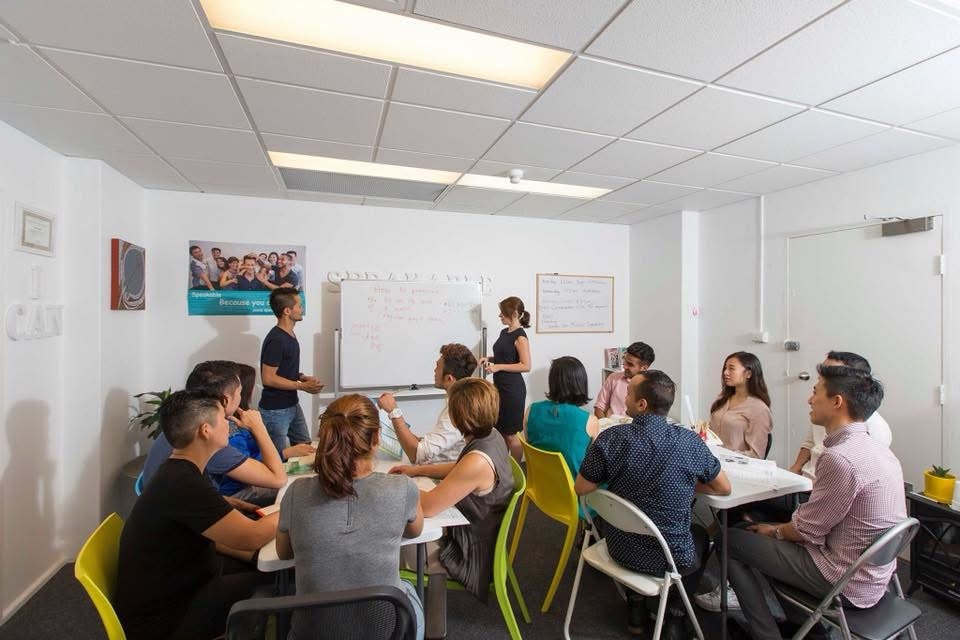
At our practice, it’s all about more than just the usual appointments; it’s about building real, meaningful connections. We treat everyone who walks through our door like family. This friendly vibe helps everyone feel included and supported, not just during sessions but as part of our bigger family circle. It’s cool to see how this turns our clients into friends who really get involved and feel connected to what we do at Speakable.
2. Stay flexible

During the COVID-19 pandemic, we quickly adapted by transitioning to telehealth services. This not only kept our practice running but also demonstrated our commitment to our clients’ progress and well-being under any circumstances. Flexibility in therapy approaches, like incorporating more digital tools or adjusting strategies based on client feedback, has also been crucial.

3. Never stop learning

My team and I personally take courses annually on the latest developments in speech & language pathology which has tremendously enhanced the therapy sessions we offer. Staying updated through continual education ensures that we are equipped with the most effective and innovative therapy techniques.

4. Set boundaries for a healthy work-life balance

Learning to set boundaries early on was essential. For example, I make it a point to not schedule clients after 6 PM so that I can have evenings with my friends, family and other hobbies. This helps maintain a sustainable work-life balance and prevents burnout.

5. Broaden your horizons

We diversified our services by introducing group therapy sessions and workshops for parents on how to support speech development at home. This not only helped stabilize our revenue streams but also catered to a broader segment of our community, enhancing our practice’s impact.

6. Get involved locally

Participating in local health fairs and school events has significantly boosted our practice’s visibility and reputation. By offering free screenings and workshops, we’ve been able to demonstrate our commitment to community wellness and draw in new clients who are looking for trusted local services.

7. Embrace technology

Investing in an integrated practice management software revolutionized how we handle appointments, billing, and client records. This technology has not only streamlined administrative tasks but also improved client satisfaction through smoother processes.
8. Feedback is gold

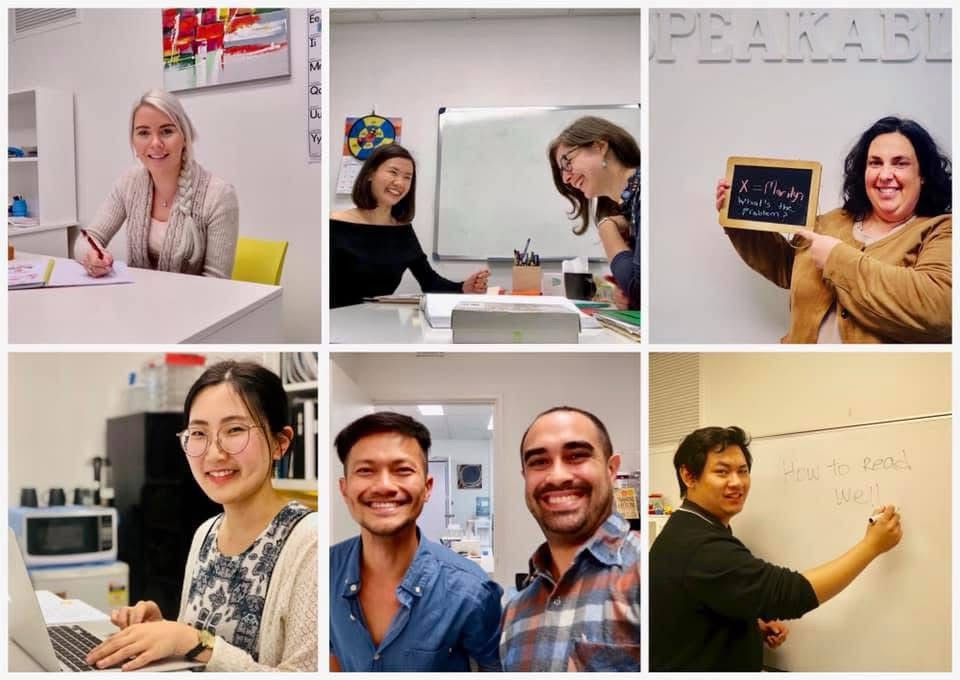
We regularly collect feedback through surveys at the end of each therapy cycle. This has been instrumental in fine-tuning our services. Celebrating positive feedback and addressing constructive criticism transparently has helped foster a culture of continuous improvement.

Running a speech pathology business is so much more than a day job—it’s a never-ending adventure of growth and discovery. These 8 lessons we’ve shared are just the beginning. Each day brings new challenges and opportunities that push us to learn more, do better, and think bigger. I’m really pumped to see where these insights will lead us and how they’ll help us make an even bigger impact. 

What kind of business are you running or thinking of starting? How do you see it evolving? Let’s inspire each other with our stories and ambitions!

Binh

Blending Art and Science: The Intersection of Acting and Speech Pathology

As someone deeply embedded in both the acting world and the realm of speech pathology, I’ve discovered some powerful synergies between the two disciplines that have profoundly influenced my approach to therapy.

Acting, at its core, is about communication—conveying emotions, ideas, and narratives in a way that resonates with an audience. Similarly, speech pathology focuses on enhancing a person’s ability to communicate effectively. 

But how exactly does acting influence my practice as a speech pathologist? Let me share some real-world insights and stories from my journey.

Using acting techniques to build confidence

One of the first lessons in acting is about building confidence—being able to stand in front of an audience and deliver your lines without letting your nerves get the better of you. This aspect of acting has been invaluable in my speech pathology sessions, especially with clients who struggle with speech anxieties or social communication.

For instance, I worked with a young client, let’s call her A, who was extremely shy and had difficulty speaking up in class. Drawing from acting, I introduced her to warm-up exercises like those used in theatre rehearsals. We practiced projecting her voice, using exaggerated expressions, and even some improvisation games. Over time, Mia’s confidence increased. She began participating more actively in class discussions and even joined drama as one for one of her school subjects.

Emotional expression and speech dynamics

Acting has taught me a lot about the nuances of emotional expression and how these can enhance speech dynamics. In therapy, I often use exercises that actors employ to convey different emotions through tone, volume, and pace. This is particularly useful for clients who speak in a monotone or whose speech lacks variation.

Take the case of S, a teenager with autism who struggled with monotonous speech. By incorporating role-playing scenarios that required expressing excitement, sadness, or curiosity, S began to understand how his tone could change the meaning of his words. His newfound ability to vary his speech made his communication more engaging and expressive.

Script analysis and speech planning

In acting, script analysis helps actors understand their characters’ motivations, which influences how they deliver their lines. This concept translates seamlessly into speech pathology, where I teach clients to plan their speech depending on their communication goals.

For example, during a session with a client preparing for a job interview, we analysed typical interview questions as if they were lines from a script. We discussed the intent behind each question and planned appropriate responses, focusing on delivering them in a way that showcased his strengths and enthusiasm for the position.

Feedback and adjustment

Finally, the iterative process of acting—where you continually receive feedback and make adjustments—is a critical component of effective speech therapy. Just as a director provides feedback to actors, I provide continuous, constructive feedback to my clients to help them refine their communication skills.

In a recent group therapy session, we created a mini-play, and each participant had roles with specific speaking parts. After each run-through, we discussed what went well and what could be improved, much like a rehearsal discussion in a theatre setting. This not only helped in fine-tuning speech skills but also fostered a supportive community among the participants.

Conclusion

The intersection of acting and speech pathology is a testament to how art and science can blend beautifully to enhance human capabilities. By integrating acting techniques into my speech pathology practice, I’ve been able to offer unique, creative solutions that motivate, inspire, and make learning enjoyable for my clients. Whether it’s through confidence-building, emotional expression, strategic planning, or iterative feedback, the art of acting continues to enrich the science of speech therapy in dynamic ways.

This cross-disciplinary approach not only makes therapy sessions more effective but also more enjoyable, proving that sometimes, a touch of art is just what science needs to change lives for the better.

I’d love to hear your thoughts or experiences on blending art with science in your own careers. Drop a comment below or reach out on my socials!

Bình

“An Inspector Calls” at Darlo Drama, Sydney, 2023

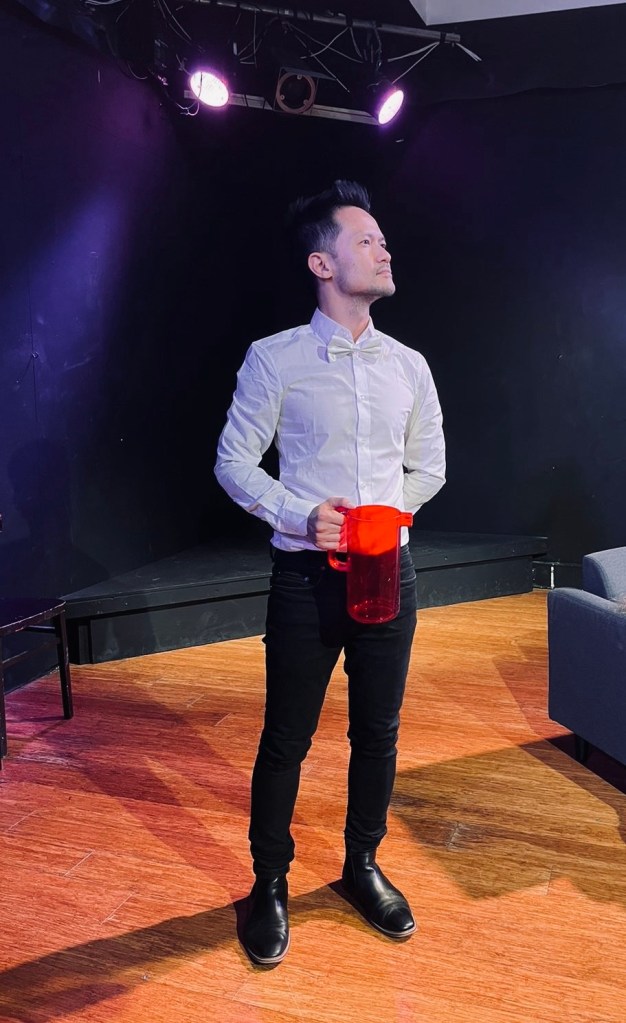
“Macbeth” with Matt Dell at Darlo Drama, Sydney, 2024
Advertising for Pearson, Sydney, 2024

Finding Balance: Juggling It All

So, you’re wondering how I manage everything from stand-up comedy classes and acting, to pole fitness, jiu-jitsu, and a full-time gig in speech pathology? Well, it’s definitely a mix of fun and frantic, but here’s how I keep things rolling without dropping the ball.

1. Setting goals

Each activity I’m into has its own vibe and purpose. Comedy keeps me on my toes, acting builds my empathy, pole and jiu-jitsu keep me fit, and my day job? Well, that’s where I get to make a real difference helping people communicate. I set clear goals for each to make sure they’re not just random things I do, but integral parts of who I am and want to be.

2. Time management

This is key. I’ve got a digital calendar that’s color-coded and blocked out for each activity. It sounds a bit much, but it helps me ensure I’m dedicating enough time to each without overbooking myself.

3. Self-care

Can’t stress this enough. With a schedule like mine, running out of juice is a real risk. So, I make sure to get enough sleep, eat right, weekly massages, and throw some yoga/mindfulness into the mix. It keeps my energy up so I can keep up with everything I’ve set out to do.

4. Stay flexible

Plans change and so do my energy levels. Some days, the best move is to skip the gym for some extra downtime. Being flexible means I can adjust on the go, which keeps me from burning out.

5. Connect the dots

Linking what I learn and experience in one area of my life to others helps too. The confidence from acting and comedy? It’s gold when I’m at work. Everything feeds into everything else in some way.

6. Lean on your squad

It’s tough to manage all this on your own. I’ve got friends, fellow hobbyists, and co-workers who get the hustle. They’re great for bouncing ideas off or venting when things become difficult.

7. Check-in with yourself

Every now and then, I take a step back to see what’s working and what’s not. It’s about being honest with myself and tweaking things if something feels off, like cutting back on an activity that no longer fits.

Balancing a bunch of passions with work is crazy but fulfilling. It’s all about enjoying the ride without getting overwhelmed. Organize, prioritize, and be ready to adapt. That’s how you make it work without losing your cool.

Comment below if you have any other tips and tricks.

Cheers,

Binh

Empowering voices, Enriching lives

Explore. Dream. Discover.

Yesterday, I rediscovered one of my favorite hobbies as a child – #origami.

There’s something magical and meditative about folding paper.

This boat also goes well with my favorite quote from #marktwain about life.

“Twenty years from now you will be more disappointed by the things that you didn’t do, than by the ones you did do. So throw off the bowlines. Sail away from the safe harbor. Catch the trade winds in your sails. Explore. Dream. Discover. ” ⛵️😍

Which childhood hobbies will you rediscover? What dreams will you dream?

paper #art #inspiration #life #quotes #marktwainquote #motivation #lovelife #livelifetothefullest #origami #dream #goals #beyou

If you don’t like where you are, move. You are not a tree. 🌲

For me, this quote is deep-rooted (no pun intended) in my life motto.

At 15, I wasn’t performing well academically and didn’t like the school where I was at, so I asked my parents to move me to another school – in Australia. That shook things up and I had no choice but trying my hardest to study English and a whole new system.

Last year, I was part of a volunteering team where I was disrespected and humiliated in front of many people by my supervisor. We were meant to work together as a team. I left the next day after telling them how I felt.

My brother and I went to see a movie where the people behind us were talking loudly. We’d politely asked them to keep the noise down and they continued to talk to each other. So we moved to the front where it was quiet – after checking to make sure that the seats were available.

At times it feels like we have no choice but staying in the same job that we don’t enjoy for many years, being in the same living condition that is uncomfortable, having the same circle of friends that we’ve grown out of, speaking up for ourselves and others etc. We are afraid of leaving as we fear of the unknown or people might judge us.

But we always have a choice – a choice to be happy in doing what we want in life!

Definitely not a tree!

Bình

No labels

You wake up one day and realize that everything has a label – made up by humans.

Your name.

Your nationality.

Your gender.

Your job title.

Your evaluation of self and others (tall, short, talkative, quiet, shy…)

Even your pet has a name 🐶 ❤️

What if things are the way they are.

No name, no label, no preconception.

How free would life be?

❤️

Bình

Come out, Come out, Whoever you are

I’m gay, and proud of it!

I was born in Saigon, Vietnam. Only about a decade ago, if a guy acted in a feminine way, he would be laughed at and/or given a well-known label, “bê đê” (a Vietnamese word that has its French origin meaning: fag). The term was commonly used. It could easily hurt someone’s feelings and lower their self-esteem. I certainly had this experience ever since the age of 4.

Being the youngest in a family of 4 children, I found myself spending more time with my 2 older sisters playing with dolls, tea sets and dress up.

My brother, who was on the opposite end of the spectrum, participated in all the boyish and adventurous activities e.g., football, karate, running around with bare feet… I admired him for that as he was much loved by the kids in the neighbourhood and my relatives.

I, on the other hand, was known to be the quiet one who was good at art, singing, dancing and literature. Most of my close friends were girls and I found them to be easy to talk to as we shared common interests.

As a result, I was automatically placed in a “different” category and name-calling was not an exception. I went through my childhood feeling attracted to the same sex. I thought that it was just a stage of development that would pass in time. I even thought that, when I grew up, I would get married and have kids just like everyone else.

At 15, I was not doing well in school. I used to be at the top of my class in Primary school. However, for some reason, my grades were lower than expected as I became older.

At the end of year 10, I asked my parents if I could leave Saigon to study in Brisbane, Australia. At the time, my parents were successful entrepreneurs and so I was lucky to be flown to Brisbane, where I finished my High School and Tertiary education.

Growing up with my Christian beliefs, I used to tell myself that “homosexuality is a sin”. I kept the secret to myself until I was 21 when I met my first boyfriend at a social gathering.  That was one of the happiest moments of my life.

Living in an open-minded country like Australia allowed me to be myself. I made new friends to whom I came out, and they had offered me a tremendous amount of support.

Throughout my teenage years into adulthood, I was not around my family and therefore they did not know much about my “other life”. 

My parents often tried to match-make me with a nice girl every time I came back to visit them in Saigon. I often kept quiet about my lifestyle in Australia as knowing the truth could potentially disappoint my family.

I then moved to Sydney where my second relationship took place. Up to this point, I’d never had a girlfriend. People often questioned my sexuality. I was fed up with social expectations.

I decided to come out to my siblings. To my surprise, they’d known for quite awhile now. They would still love me regardless of my sexual orientation. Pheww! What a relief to know that I was very much loved and supported by my brother and sisters.

The next step was to tell my parents. I often avoided the question of marriage.

Until one day, my Mum directly asked me: “Binh, as you’re older now, it’s time to think about finding the right girl and getting  married…”. I thought to myself, this is the moment.

So I replied, “Mum, I’m interested in men.”. Mum did not respond or appear angry. She remained calm but did not look at me.

I turned to my Dad and said: “I’m sure you guys know!”. He said: “Yes! We’ve known about this for awhile…and at this stage, I don’t think it really matters. We are open-minded and as long as you’re happy, that’s all we care about!”.

I was in tears. That was much easier than I thought.

Both of my parents passed away not long after that due to terminal illnesses.

I’m glad that I came out to them as they are my parents and have the right to know.

620765_10151411658862802_363002420_o

One might think she/he has to be ready to come out. In my opinion, it is a progressive process which involves a number of small steps that should be considered in order to achieve the ultimate goal:

1. Come out to yourself: Get to know yourself well: your strengths, weaknesses, interests and sexual orientation. Accept and love yourself for who you are because at the end of the day, you have to live with yourself for the rest of your life.

2. Come out to your close friends: Coming out to your close friends is a good place to start. Some will be happy for you. Some will be confused. Some will get upset. Just come out anyway! You will at least receive much-needed support.

3. Come out to your siblings: If you have siblings, come out to them. Like it or not, they are related to you by blood and they might want to know the truth. You’re now a step closer to telling your parents!

4. Come out to your parents: This can be the biggest challenge! Take a plunge and tell them when the right moment comes e.g., when they ask you about your relationship status or suggest that you get a BF or GF. You will feel so much better afterwards. Parents often have great expectations of their kids and some will find it hard to accept the truth. Time will tell if they are able to live with this truth or not.

5. Come out to the world: Now that you’ve gone through all of the previous steps (remember, it doesn’t have to be in that particular order), it’s time to come out to the world and let them know how proud you are to be yourself

While “hiding” in the closet, I missed out on a chance to “seek” my truth. 

By coming out, I am being true to myself and others and live a happier life. Coming out is hard, but not coming out is even harder.

Be true to yourself. Be happy.

Love and peace to you.

Binh