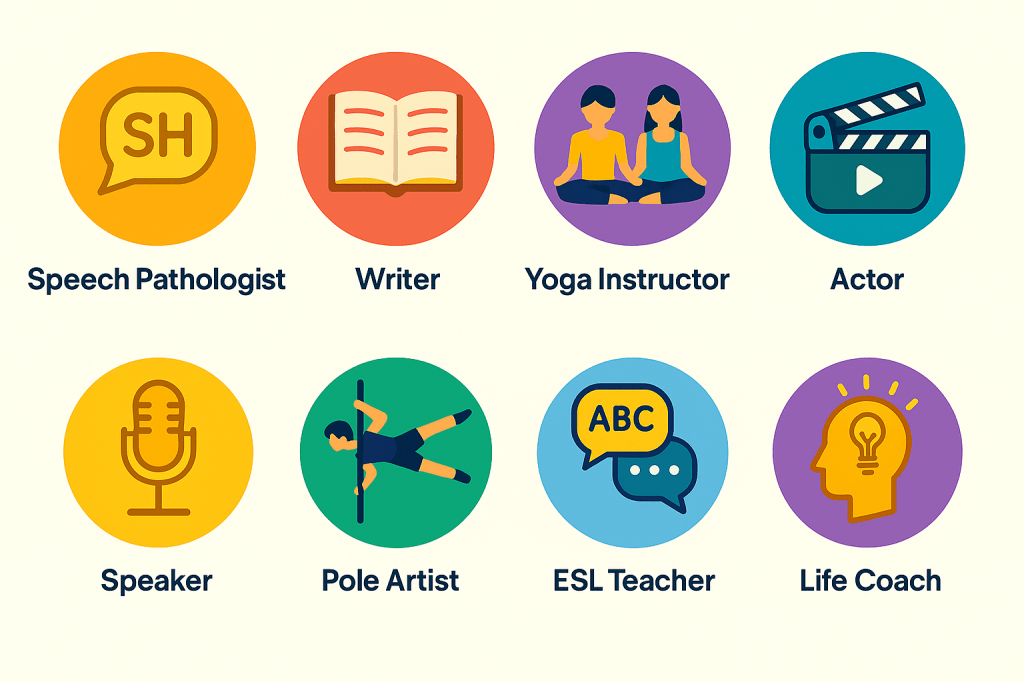
Why I Love Being a Polymath

People sometimes ask me, “How do you do so many things?”

My honest answer: I don’t know how NOT to.

I’ve never been someone who fits neatly into one box. I’m a speech pathologist, a writer, a life coach, an actor, a yoga teacher, an ESL educator, a business owner, and yes, someone who hangs upside down on a pole for fun.

And somehow… it all makes perfect sense to me.

Being a polymath feels like living in colour. Every skill I learn feeds another part of my life. Every curiosity becomes a doorway. Every new passion adds a layer to who I am and how I show up in the world.

Speech Pathology taught me to communicate with purpose

Working with kids and families has given me the deepest understanding of communication, not just the mechanics, but the heart behind it. Helping someone speak, read, learn, or connect unlocks something inside me too.

Life coaching taught me to listen, REALLY listen

Coaching helped me tune in to people’s dreams, fears, habits, and patterns. It made me a better therapist, a better friend, and honestly, a better human. It’s one of the skills that anchors everything else I do.

Acting taught me to feel everything fully

Acting is where I get to be bold, expressive, vulnerable, and creative in ways everyday life doesn’t always allow. It’s helped me understand characters, emotions, humanity – which loops right back into my coaching and therapy work.

Writing taught me to make sense of the world

Words are how I process life. From “The Speakable Child” to the new projects I’m creating, writing lets me turn ideas into stories, and stories into something useful for someone else.

Yoga taught me to breathe and soften

Yoga balances the fire. It reminds me to slow down, feel my body, and come back to myself, something all polymaths need because our brains can be like hummingbirds.

Pole art taught me strength, discipline, and play

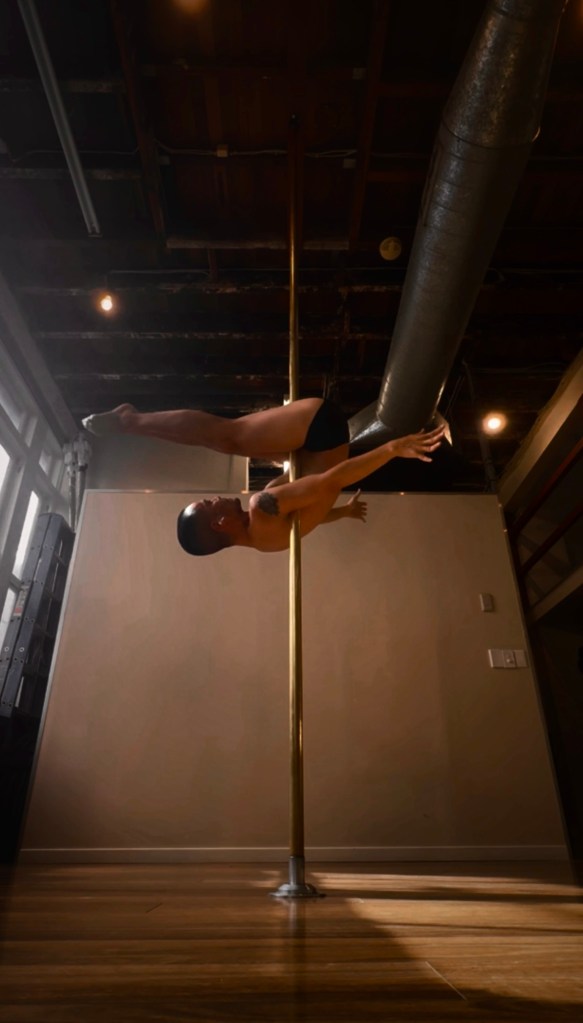
Pole is where I surprise myself the most. The strength, the flow, the artistry; it’s a celebration of being human. It’s creative and athletic at the same time, and it’s one of the places where I feel the most free.

Business taught me courage

Speakable didn’t build itself. It took years of ideas, risks, failures, and growth. Being an entrepreneur showed me that creativity isn’t just an art; it’s a strategy.

What I love most about being a polymath

It’s not the titles or the skills.

It’s the way everything overlaps.

My acting improves my communication coaching.

My coaching improves my therapy.

My therapy work gives depth to my writing.

My writing clears my mind for yoga.

Yoga strengthens my discipline for pole.

Pole energises me for everything else.

It’s all connected like a tapestry of passions that weave together into one life.

I love being a polymath because it lets me be all of me.

Not half. Not one slice.

All.

And if there’s one message I hope people take from my journey, it’s this:

You don’t need to choose one dream.

You’re allowed to choose many and let them shape you into something extraordinary.

Binh

Stillness Isn’t Stagnation

There’s a quiet power in doing nothing. Yet for many of us – especially those who thrive on momentum, goals, and creativity – stillness can feel like weakness. We’re taught to move, achieve, and keep pushing. But what happens when our bodies – or life itself – tell us to stop?

When the Body Says “Enough”

Last month, during a pole class, I pushed myself too hard. I wanted to master a new combination, one I’d been working on for weeks. My body was tired, but I told myself, “Just one more try.”

Halfway through the move, I felt a sharp pain shoot through the side of my ribs. It was the kind of pain that silences the room, the kind that whispers, “You went too far.”

For the next few weeks, I couldn’t train the way I wanted. I had to rest – truly rest. At first, I felt frustrated. I worried about losing strength, rhythm, progress. But then something unexpected happened: I started to notice how exhausted I had been, not just physically, but mentally. My body wasn’t betraying me; it was begging me to listen.

The Lesson in Stillness

Yoga teaches me that every action has a counterbalance. Tapas – the fiery discipline that drives us – must always be held by santosha – the contentment that reminds us to rest in what is.

My rib injury became a teacher. It reminded me that stillness isn’t stagnation – it’s integration. It’s the moment when everything we’ve been working toward begins to settle and take form.

In that forced pause, I realized how much growth happens in the quiet. My body healed, yes, and so did my mind. I reflected on how often I equate motion with worth, productivity with purpose. Yet the truth is, I often find the deepest clarity not when I’m moving fast, but when I finally slow down enough to feel.

Rest Is Not Regression

Rest doesn’t mean going backwards. Just like muscles need recovery to rebuild stronger, our creativity, focus, and spirit need space to renew. Even nature rests – the tides pause, the moon wanes, the trees go still in winter.

If a tree doesn’t grow visibly for a season, we don’t call it lazy – we call it preparing. My rib was my winter. It forced me to pause, to breathe, to reflect. And when I finally returned to pole, I moved differently – more aware, more connected, more at peace with my pace.

Learning to Slow Without Guilt

For high-achievers, slowing down often comes with guilt. We worry that if we pause, we’ll fall behind. But I’ve learned that the pause is part of the rhythm – inhale, exhale; effort, surrender.

Stillness gives us perspective. It teaches us to trust the unseen which is the quiet recalibration happening beneath the surface. It’s not that progress stops; it simply moves inward.

The Beauty of the Pause

Now, when I step into the studio, I take a moment before every climb. I check in with my breath. I move from awareness, not adrenaline. I’ve learned that sometimes, slowing down is the most courageous thing we can do.

Because stillness isn’t stagnation.

It’s the sacred space where we soften, listen, and return to balance.

It’s where we stop striving long enough to remember why we started.

If you’ve ever felt guilty for resting, may this be your permission to pause. The world will still be there when you return, and you’ll meet it more whole, more grounded, and more alive.

Big hugs,

Bình

Relaxing at a cafe ☕️

Why I Don’t Have an English Name & Why Authenticity Matters 🇻🇳 🪷

The Question That Often Comes Up

When I first moved to Australia as a teenager, one of the first questions people asked me was: “What’s your English name?”

Sometimes people didn’t even ask. They just assumed. I’ve been called Ben more times than I can count, probably because it sounds a little like Bình, and it felt easier for them.

Even my pastor in Brisbane once gave me the name Timothy. For a few months in high school, I tried it out. I introduced myself as Timothy, signed my name that way, and went along with it. But it never sat right. Every time I heard it, I felt disconnected, like I was playing a role that didn’t belong to me. Eventually, I let it go.

Names Carry Stories

In Vietnamese, Bình means peace. It’s short, simple, and powerful. More than that, it carries the story my parents gave me at birth. It connects me to my family, my culture, and the resilience of generations who lived through the Vietnam War.

Trading it for something “easier” felt like erasing that story. My name is part of who I am, and it deserves to be spoken.

Authenticity Over Convenience

I understand why many people adopt English names. Sometimes it feels easier. You don’t have to repeat yourself three times in class or sit through the awkward silence of someone struggling to pronounce it.

But for me, keeping Bình has been an act of authenticity. Yes, it means people stumble. Yes, sometimes they call me Ben without asking. But each time I correct them, I’m affirming: my name matters, and so do I.

Representation Matters

If people can learn to say names like Schwarzenegger or Tchaikovsky, they can learn to say Bình. It’s about effort, respect, and expanding what we consider “normal.”

By keeping my Vietnamese name, I hope I make space for others too. The more we hear names from different cultures in classrooms, workplaces, and communities, the more they become part of our shared story.

Owning My Identity

My name grounds me. It’s a reminder that I don’t need to reshape who I am to fit in. I am not Ben. I am not Timothy. I am Bình and that’s enough.

So no, I don’t have an English name. And I don’t need one. My name is part of my authenticity, and authenticity is something I’ll never trade away.

Names are not a burden; they’re a gift. Honor them, speak them, and wear yours with pride.

Whether it’s your name, your culture, or your story, don’t feel you have to shrink or change it for others.

Your authenticity is your strength. Be proud!

Hugs,

Bình

From Idea to Impact: 11 Lessons in 11 Years of Speakable

This year, we celebrate 11 years of Speakable Speech Pathology – a milestone that reminds us how far a simple idea can grow when it’s backed by passion, persistence, and purpose. 

When I first started Speakable in 2014, I couldn’t have imagined the incredible journey it would become. What began as a vision to help children find their voice has grown into a thriving practice that impacts families every day.

Along the way, we’ve learned a lot about what it takes to build not just a business, but a mission-driven start-up that lasts. 

To celebrate, I’d like to share 11 lessons from 11 years that shaped Speakable and can help guide anyone dreaming of starting something of their own.

1. Start with purpose

The heart of any successful start-up is a clear “why.” For Speakable, it was simple: helping children become confident communicators and learners. Purpose fuels resilience – it’s what keeps you going when things get hard.

2. Solve a real problem

A start-up only works if it addresses a genuine need. Parents were searching for practical, evidence-based strategies to support their children’s speech and language. Speakable was built to fill that gap with accessible, personalised solutions.

3. Begin small, dream big

Speakable didn’t begin with a full team, branded office, or polished systems. It started with a commitment to serve (and a small table). Growth followed naturally as we stayed focused on helping one family at a time.

4. Build relationships, not just clients

Our growth has always come from word-of-mouth referrals and long-term relationships. People don’t just buy services as they invest in trust, care, and genuine connection.

5. Adapt and evolve

The pandemic taught us this lesson most vividly. We pivoted to online services, developed new resources, and found ways to support families remotely. Flexibility kept us relevant and resilient.

6. Hire for heart and skill

As Speakable grew, so did our team. We learned to bring in people who not only had the expertise, but also shared the same vision and values. Culture is the backbone of a strong start-up.

7. Keep learning

Running a business means wearing many hats. At the start, I was a clinician, a marketer, a manager, a technician, a cleaner and a coach. I invested in learning constantly, whether it was professional development, business strategy, or leadership training.

8. Celebrate small wins

Every milestone matters. From a child saying their first word to expanding our clinic, celebrating progress kept the journey joyful.

9. Stay financially grounded

Growth is exciting, but sustainability requires careful planning. From reinvesting profits to setting fair fees, keeping Speakable financially healthy ensured we could keep serving families long-term.

10. Give back

Success isn’t just measured in profit – it’s about impact. Speakable has always been about more than therapy sessions. It’s about empowering parents, training future clinicians, and sharing knowledge through workshops and writing.

Over the years, we’ve also extended our impact by supporting charities such as the World Food Programme, Blue Dragon Children’s Foundation, and One Tree Planted. Giving back has been an essential part of our journey because true success comes from creating ripples of change beyond your own business.

11. Never lose sight of the vision

Through every challenge, from long hours to unexpected changes, the vision of Speakable – to give children a voice – has been the guiding light. That vision has kept us grounded, inspired, and moving forward.

Looking ahead

Eleven years in, Speakable is stronger than ever. The road hasn’t always been easy, but it has been worth it. If there’s one message I’d share with anyone starting a new venture, it’s this: anchor yourself in purpose, stay adaptable, and keep learning.

Here’s to the next chapter, and to every dreamer ready to turn their idea into something remarkable.

Big hugs, 

Bình 

Finding Balance: Juggling It All

So, you’re wondering how I manage everything from stand-up comedy classes and acting, to pole fitness, jiu-jitsu, and a full-time gig in speech pathology? Well, it’s definitely a mix of fun and frantic, but here’s how I keep things rolling without dropping the ball.

1. Setting goals

Each activity I’m into has its own vibe and purpose. Comedy keeps me on my toes, acting builds my empathy, pole and jiu-jitsu keep me fit, and my day job? Well, that’s where I get to make a real difference helping people communicate. I set clear goals for each to make sure they’re not just random things I do, but integral parts of who I am and want to be.

2. Time management

This is key. I’ve got a digital calendar that’s color-coded and blocked out for each activity. It sounds a bit much, but it helps me ensure I’m dedicating enough time to each without overbooking myself.

3. Self-care

Can’t stress this enough. With a schedule like mine, running out of juice is a real risk. So, I make sure to get enough sleep, eat right, weekly massages, and throw some yoga/mindfulness into the mix. It keeps my energy up so I can keep up with everything I’ve set out to do.

4. Stay flexible

Plans change and so do my energy levels. Some days, the best move is to skip the gym for some extra downtime. Being flexible means I can adjust on the go, which keeps me from burning out.

5. Connect the dots

Linking what I learn and experience in one area of my life to others helps too. The confidence from acting and comedy? It’s gold when I’m at work. Everything feeds into everything else in some way.

6. Lean on your squad

It’s tough to manage all this on your own. I’ve got friends, fellow hobbyists, and co-workers who get the hustle. They’re great for bouncing ideas off or venting when things become difficult.

7. Check-in with yourself

Every now and then, I take a step back to see what’s working and what’s not. It’s about being honest with myself and tweaking things if something feels off, like cutting back on an activity that no longer fits.

Balancing a bunch of passions with work is crazy but fulfilling. It’s all about enjoying the ride without getting overwhelmed. Organize, prioritize, and be ready to adapt. That’s how you make it work without losing your cool.

Comment below if you have any other tips and tricks.

Cheers,

Binh

Empowering voices, Enriching lives

How to Stay Motivated for the New Year 2025

As we step into 2025, it’s the perfect time to set intentions and recharge our motivation. The new year is like a blank page—full of opportunities to grow, achieve, and thrive.

But how can we maintain that fresh-start energy long after January?

Over the years, I’ve gathered these strategies from experts in personal development, including insights from James Clear (author of Atomic Habits), Dr. Angela Duckworth (author of Grit), and the wisdom shared by life coaches and psychologists in various workshops. Here’s what I’ve learned:

1. Set Clear Goals

Define what success looks like for you this year. Break big goals into smaller, actionable steps, and celebrate each win along the way. James Clear emphasizes that “systems are more important than goals”—focus on daily habits that align with your vision.

2. Focus on Your “Why”

Motivation flourishes when you have a strong reason behind your goals. Dr. Angela Duckworth’s research highlights the power of purpose in sustaining grit. Ask yourself, Why do I want this? Keeping your “why” front and center builds resilience.

3. Build a Positive Routine

Consistency beats perfection. Start your mornings with habits that inspire you—a quick workout, journaling, or savoring your coffee without distractions. James Clear advises starting small and building momentum, proving that tiny habits lead to big changes over time.

4. Surround Yourself with Positivity

Your environment matters. Life coach Tony Robbins often emphasizes the impact of those you spend time with. Surround yourself with people who encourage you, inspiring books, or motivational podcasts. Positive energy is contagious.

5. Embrace Flexibility

Life is unpredictable. Instead of seeing obstacles as failures, view them as detours to learn and grow. Experts like psychologist Carol Dweck advocate for a growth mindset—an attitude that helps you adapt and thrive.

6. Reflect and Recalibrate

Check in with yourself regularly. Are your goals still aligning with your values? Reflection keeps you focused and ensures you’re heading in the right direction. Many high achievers, like Oprah Winfrey, stress the importance of self-assessment to stay motivated.

As 2025 unfolds, remember: motivation isn’t a constant—it’s something you cultivate. Show up for yourself daily, and by the time 2026 rolls around, you’ll be amazed at how far you’ve come.

Happy New Year! 🎉

Binh