Why I Love Being a Polymath

People sometimes ask me, “How do you do so many things?”

My honest answer: I don’t know how NOT to.

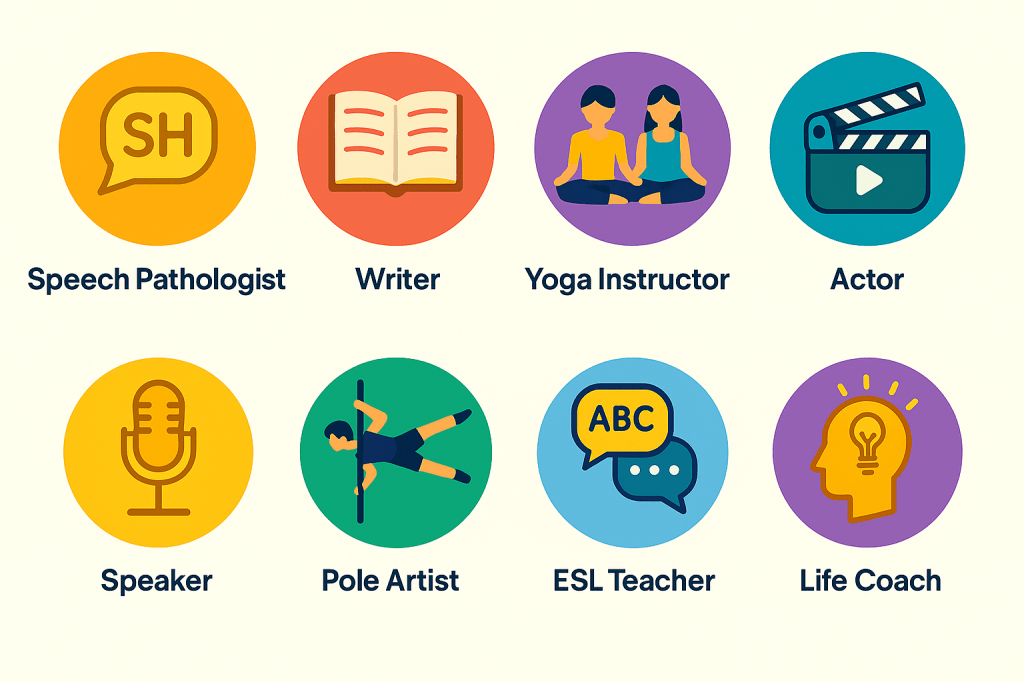
I’ve never been someone who fits neatly into one box. I’m a speech pathologist, a writer, a life coach, an actor, a yoga teacher, an ESL educator, a business owner, and yes, someone who hangs upside down on a pole for fun.

And somehow… it all makes perfect sense to me.

Being a polymath feels like living in colour. Every skill I learn feeds another part of my life. Every curiosity becomes a doorway. Every new passion adds a layer to who I am and how I show up in the world.

Speech Pathology taught me to communicate with purpose

Working with kids and families has given me the deepest understanding of communication, not just the mechanics, but the heart behind it. Helping someone speak, read, learn, or connect unlocks something inside me too.

Life coaching taught me to listen, REALLY listen

Coaching helped me tune in to people’s dreams, fears, habits, and patterns. It made me a better therapist, a better friend, and honestly, a better human. It’s one of the skills that anchors everything else I do.

Acting taught me to feel everything fully

Acting is where I get to be bold, expressive, vulnerable, and creative in ways everyday life doesn’t always allow. It’s helped me understand characters, emotions, humanity – which loops right back into my coaching and therapy work.

Writing taught me to make sense of the world

Words are how I process life. From “The Speakable Child” to the new projects I’m creating, writing lets me turn ideas into stories, and stories into something useful for someone else.

Yoga taught me to breathe and soften

Yoga balances the fire. It reminds me to slow down, feel my body, and come back to myself, something all polymaths need because our brains can be like hummingbirds.

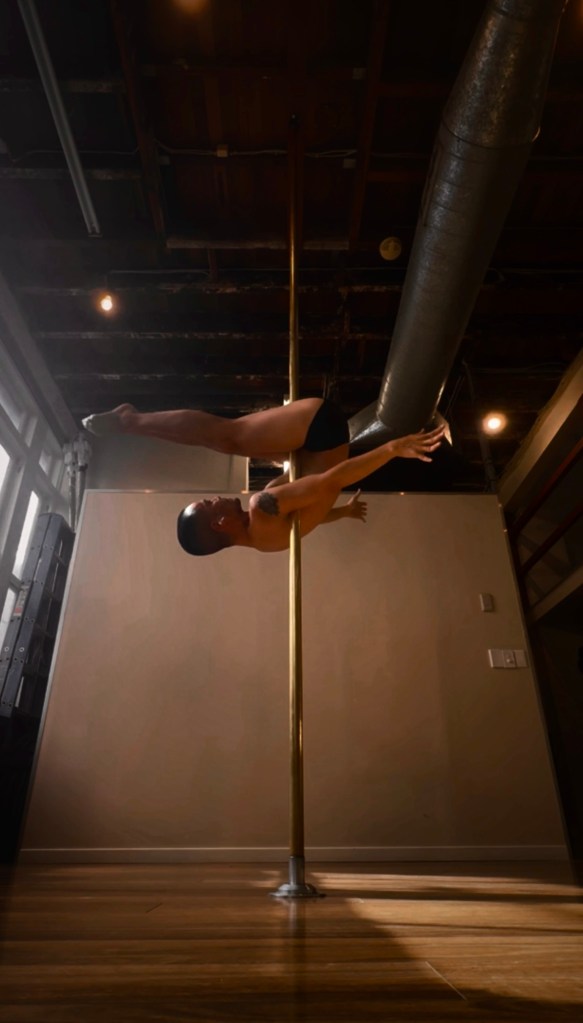
Pole art taught me strength, discipline, and play

Pole is where I surprise myself the most. The strength, the flow, the artistry; it’s a celebration of being human. It’s creative and athletic at the same time, and it’s one of the places where I feel the most free.

Business taught me courage

Speakable didn’t build itself. It took years of ideas, risks, failures, and growth. Being an entrepreneur showed me that creativity isn’t just an art; it’s a strategy.

What I love most about being a polymath

It’s not the titles or the skills.

It’s the way everything overlaps.

My acting improves my communication coaching.

My coaching improves my therapy.

My therapy work gives depth to my writing.

My writing clears my mind for yoga.

Yoga strengthens my discipline for pole.

Pole energises me for everything else.

It’s all connected like a tapestry of passions that weave together into one life.

I love being a polymath because it lets me be all of me.

Not half. Not one slice.

All.

And if there’s one message I hope people take from my journey, it’s this:

You don’t need to choose one dream.

You’re allowed to choose many and let them shape you into something extraordinary.

Binh
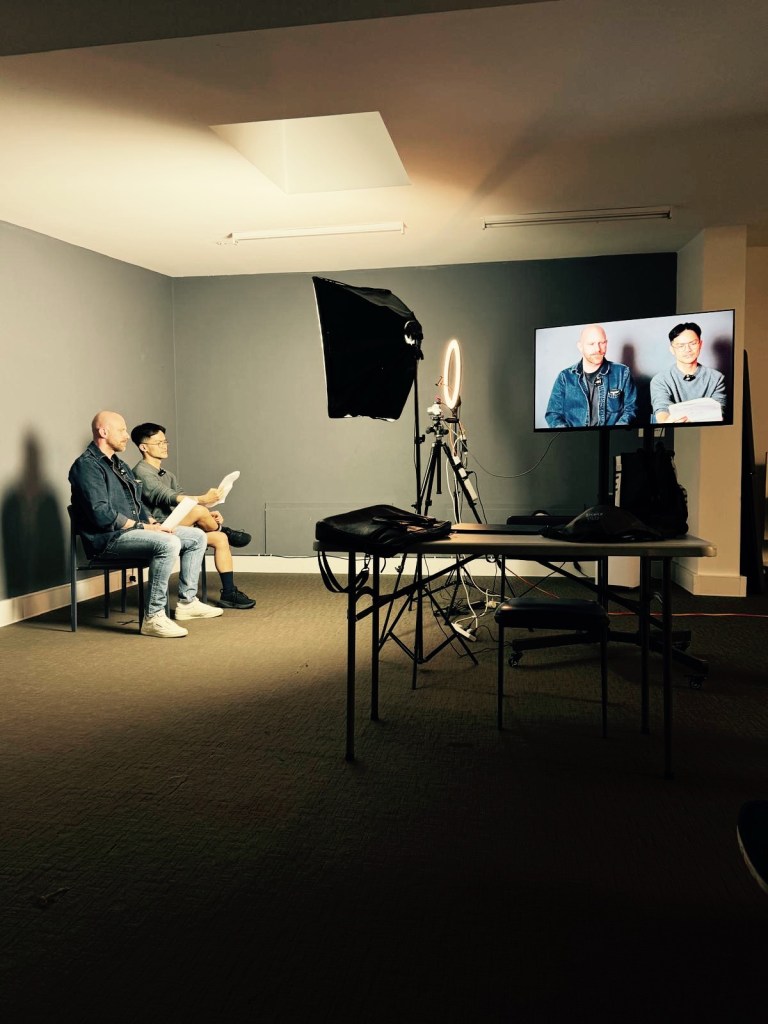
🎬 What Screen Acting Has Taught Me About Life, Communication & Courage

In 2024, when I first stepped into a screen-acting class at Darlo Drama, I thought I was simply learning how to perform for a camera. I didn’t realise I was stepping into a new training ground for presence, vulnerability, and connection – lessons that would ripple into my work as a speech pathologist, a coach, and even my everyday life.

Here are the biggest lessons screen acting has taught me:

1. Stillness Speaks Loudly

On screen, even the smallest movement matters. A slight eyebrow raise, the softening of a shoulder, a breath.

Screen acting trained me to slow down, to let a moment land, and to communicate without rushing.

This same stillness now helps me:

listen more deeply to clients, hold space in sessions and stay grounded in intense conversations.

In real life, stillness isn’t emptiness – it’s power.

2. Authenticity Reads Better Than Performance

The camera always knows when you’re pretending.

To deliver a truthful performance, you must strip away the masks, the rehearsed patterns, the “perfect” version of yourself and instead lead with honesty.

This has shaped how I teach communication:

Kids open up faster when I am real with them.

Parents trust me when I speak from the heart.

Teen clients relax when they feel seen, not analyzed.

Acting reminded me that people connect most with what is true.

3. Vulnerability Isn’t Weakness – It’s Courage

Screen scenes often require you to tap into fear, anger, grief, joy, or embarrassment on cue.

It’s emotional gymnastics.

To do that, you must access your own emotional truth and allow others to witness it.

Stepping into vulnerability on camera has made me braver in daily life:

asking for help, expressing boundaries, admitting mistakes and sharing my own stories.

Vulnerability creates trust. Trust creates connection.

4. You Learn to Fail Fast and Try Again

In acting, most takes “don’t work.”

You forget a line.

The emotion doesn’t land.

Your eye line is off.

Someone sneezes on set.

You just breathe and go again.

This resilience has flowed into everything I do especially business. Every idea, script, resource, workshop, or video is simply another “take.” If it doesn’t land, I reset and try again.

Failure isn’t failure.

It’s rehearsal.

5. Presence Over Perfection

A perfectly delivered line doesn’t matter if you’re disconnected.

But a messy line delivered with heart?

That’s magic.

Screen acting taught me:

to stay present instead of perfect, to listen instead of planning my next move, to drop into the moment instead of controlling it.

This has made me a stronger communicator, therapist, teacher, and performer.

6. Creativity Expands You

You never know what a script will ask of you:

A whisper.

A scream.

A heartbreak.

A transformation.

You stretch into new emotional shapes.

You play.

You experiment.

You become more you.

Every class reminds me that creativity is not a luxury but nourishment.

7. The Camera Teaches You Who You Really Are

When you watch yourself on screen, you see:

your habits, your strengths, your insecurities, your presence and your blind spots.

It’s confronting and incredibly liberating.

You learn to accept yourself more fully.

You learn to love the parts you once criticised.

You learn that expression is not about looking perfect but it’s about being true.

Final Thoughts

Screen acting has become more than a hobby for me. It’s a mirror, a teacher, and a form of therapy.

It has made me:

a stronger communicator, a more grounded teacher, a more compassionate clinician, a more courageous artist and a more authentic human.

I went into acting to learn performance.

I came out learning presence.

Thanks to my teachers and acting partners for pushing me and working with me. It’s an ongoing journey of learning! And thank YOU for reading my blog. xx

Bình

Blending Art and Science: The Intersection of Acting and Speech Pathology

As someone deeply embedded in both the acting world and the realm of speech pathology, I’ve discovered some powerful synergies between the two disciplines that have profoundly influenced my approach to therapy.

Acting, at its core, is about communication—conveying emotions, ideas, and narratives in a way that resonates with an audience. Similarly, speech pathology focuses on enhancing a person’s ability to communicate effectively. 

But how exactly does acting influence my practice as a speech pathologist? Let me share some real-world insights and stories from my journey.

Using acting techniques to build confidence

One of the first lessons in acting is about building confidence—being able to stand in front of an audience and deliver your lines without letting your nerves get the better of you. This aspect of acting has been invaluable in my speech pathology sessions, especially with clients who struggle with speech anxieties or social communication.

For instance, I worked with a young client, let’s call her A, who was extremely shy and had difficulty speaking up in class. Drawing from acting, I introduced her to warm-up exercises like those used in theatre rehearsals. We practiced projecting her voice, using exaggerated expressions, and even some improvisation games. Over time, Mia’s confidence increased. She began participating more actively in class discussions and even joined drama as one for one of her school subjects.

Emotional expression and speech dynamics

Acting has taught me a lot about the nuances of emotional expression and how these can enhance speech dynamics. In therapy, I often use exercises that actors employ to convey different emotions through tone, volume, and pace. This is particularly useful for clients who speak in a monotone or whose speech lacks variation.

Take the case of S, a teenager with autism who struggled with monotonous speech. By incorporating role-playing scenarios that required expressing excitement, sadness, or curiosity, S began to understand how his tone could change the meaning of his words. His newfound ability to vary his speech made his communication more engaging and expressive.

Script analysis and speech planning

In acting, script analysis helps actors understand their characters’ motivations, which influences how they deliver their lines. This concept translates seamlessly into speech pathology, where I teach clients to plan their speech depending on their communication goals.

For example, during a session with a client preparing for a job interview, we analysed typical interview questions as if they were lines from a script. We discussed the intent behind each question and planned appropriate responses, focusing on delivering them in a way that showcased his strengths and enthusiasm for the position.

Feedback and adjustment

Finally, the iterative process of acting—where you continually receive feedback and make adjustments—is a critical component of effective speech therapy. Just as a director provides feedback to actors, I provide continuous, constructive feedback to my clients to help them refine their communication skills.

In a recent group therapy session, we created a mini-play, and each participant had roles with specific speaking parts. After each run-through, we discussed what went well and what could be improved, much like a rehearsal discussion in a theatre setting. This not only helped in fine-tuning speech skills but also fostered a supportive community among the participants.

Conclusion

The intersection of acting and speech pathology is a testament to how art and science can blend beautifully to enhance human capabilities. By integrating acting techniques into my speech pathology practice, I’ve been able to offer unique, creative solutions that motivate, inspire, and make learning enjoyable for my clients. Whether it’s through confidence-building, emotional expression, strategic planning, or iterative feedback, the art of acting continues to enrich the science of speech therapy in dynamic ways.

This cross-disciplinary approach not only makes therapy sessions more effective but also more enjoyable, proving that sometimes, a touch of art is just what science needs to change lives for the better.

I’d love to hear your thoughts or experiences on blending art with science in your own careers. Drop a comment below or reach out on my socials!

Bình

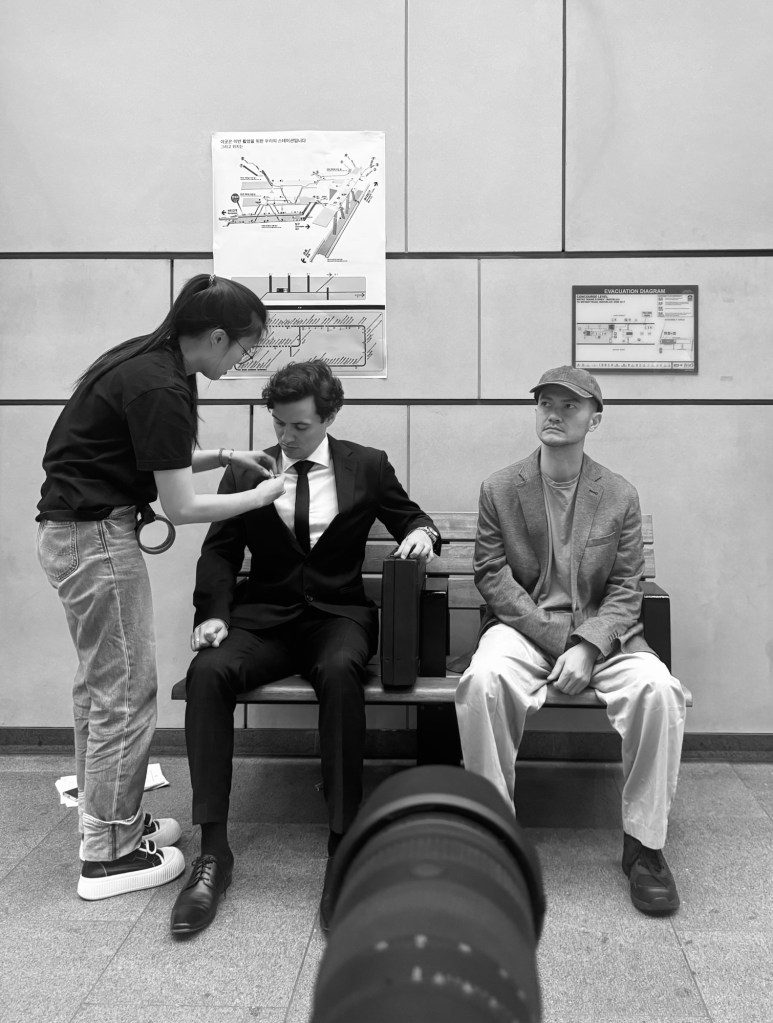
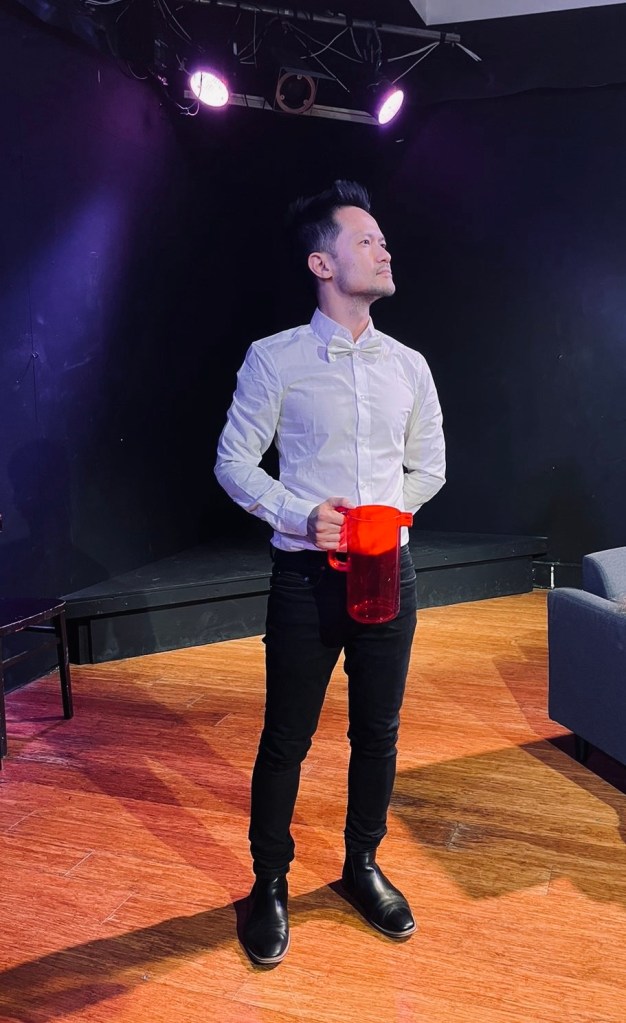
“An Inspector Calls” at Darlo Drama, Sydney, 2023

“Macbeth” with Matt Dell at Darlo Drama, Sydney, 2024
Advertising for Pearson, Sydney, 2024

Finding Balance: Juggling It All

So, you’re wondering how I manage everything from stand-up comedy classes and acting, to pole fitness, jiu-jitsu, and a full-time gig in speech pathology? Well, it’s definitely a mix of fun and frantic, but here’s how I keep things rolling without dropping the ball.

1. Setting goals

Each activity I’m into has its own vibe and purpose. Comedy keeps me on my toes, acting builds my empathy, pole and jiu-jitsu keep me fit, and my day job? Well, that’s where I get to make a real difference helping people communicate. I set clear goals for each to make sure they’re not just random things I do, but integral parts of who I am and want to be.

2. Time management

This is key. I’ve got a digital calendar that’s color-coded and blocked out for each activity. It sounds a bit much, but it helps me ensure I’m dedicating enough time to each without overbooking myself.

3. Self-care

Can’t stress this enough. With a schedule like mine, running out of juice is a real risk. So, I make sure to get enough sleep, eat right, weekly massages, and throw some yoga/mindfulness into the mix. It keeps my energy up so I can keep up with everything I’ve set out to do.

4. Stay flexible

Plans change and so do my energy levels. Some days, the best move is to skip the gym for some extra downtime. Being flexible means I can adjust on the go, which keeps me from burning out.

5. Connect the dots

Linking what I learn and experience in one area of my life to others helps too. The confidence from acting and comedy? It’s gold when I’m at work. Everything feeds into everything else in some way.

6. Lean on your squad

It’s tough to manage all this on your own. I’ve got friends, fellow hobbyists, and co-workers who get the hustle. They’re great for bouncing ideas off or venting when things become difficult.

7. Check-in with yourself

Every now and then, I take a step back to see what’s working and what’s not. It’s about being honest with myself and tweaking things if something feels off, like cutting back on an activity that no longer fits.

Balancing a bunch of passions with work is crazy but fulfilling. It’s all about enjoying the ride without getting overwhelmed. Organize, prioritize, and be ready to adapt. That’s how you make it work without losing your cool.

Comment below if you have any other tips and tricks.

Cheers,

Binh

Empowering voices, Enriching lives